Category: Uncategorized

Journey of the Mind

Cheery Friday Greetings (from Bucharest!) to our Learning How to Learners!

Book of the Month

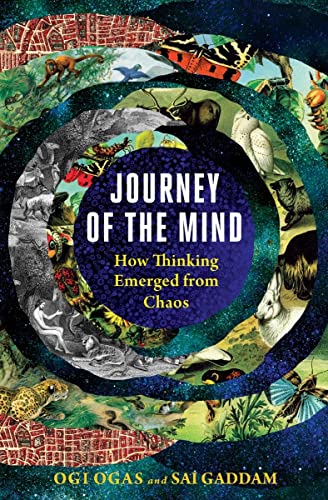
Journey of the Mind: How Thinking Emerged from Chaos, by Ogi Ogas and Sai Gaddam. This engrossing book provides a step-by-step understanding of how consciousness, language, self-awareness, and civilization itself arose. What’s unique about this book is its gradual exploration, with vivid illustrations, of how consciousness advanced as it progressed from amoeba to worms, frogs, birds, monkeys and humans.  In the context of all this, we learn of the extraordinary work of Stephen Grossberg, a Newton of neuroscience whose groundbreaking discoveries have quietly underpinned many neuroscientific advances. Highly recommended!

5 AWESOME memory books you’ve probably never heard of!

Here’s a fascinating video from our favorite memory maven, Nelson Dellis, 5 times US Memory Champion, on his favorite non-obvious memory books.  This is a riveting video not only for the books that Nelson describes, but for the fun way that Nelson edits and tells the story.

“On Thinking Matters,” Cairo Egypt Annual Conference 2022

Barb will be giving a webinar keynote on June 17th: “On Thinking Matters,” for the Cairo Egypt “On Thinking Matters,” 2022. Register here. Barb’s talk will explore metacognition, flexible and inflexible thinking, jumping to conclusions, and more!

Barb on Slovenian television

Let a bit of Slovenia lighten your day! Barb converses (in English, despite the first minute or so of Slovenian introduction) with RTV SLO television show Dobro Yutro host Mojca Mavec about the arrival of the book A Mind for Numbers in Slovenian from the publisher Zalozba Vida

Podcast – Roll with the Punches

Here’s Barb (Apple or Spotify) in conversation with ace Australian podcaster Tiffanee Cook on her show Roll with the Punches (fittingly, Tiffanee was a martial arts expert).  Enjoy!

Meta’s Yann LeCun strives for human-level AI

Here is a great article by Ben Dickson in VentureBeat, recommended by Terry, on the future of artificial intelligence.

If you’d like a little humor about today’s approaches to teaching math

As one of the commenters noted, it’s hard to understand how the actors kept their faces straight in this amusing take on modern pedagogical approaches to math.

Opportunity for Remote Math Tutoring

Zara Tutoring, centered out of Barb’s neighborhood in Michigan, has opportunities for remote math tutorsapply here

With Traditional Learning Paradigms Disrupted By Covid, What Can Cognitive Neuroscience (and Homer Simpson) Teach Us About Becoming Better Learners?

This perceptive review by experienced teacher Travis Koutsoubos-Miles of our book Uncommon Sense Teaching provides fine insight on the book’s key concepts.  Key graf: “Uncommon Sense Teaching is fresh and insightful. Most importantly, it shows us why learning hinges less on teacher actions and more on whether students actively process what they’ve been taught. Informed by learning science, our best teaching can encourage students’ attention, retrieval, rest, and consolidation through strategies that smooth the path to learning and reduce the likelihood of forgetting. With the instruction students have lost due to COVID, we need to maximize how students learn more than ever before. Written by scholars but for lay people, books like Uncommon Sense Teaching set parents and educators well on our way to helping students do so.” 

Do You Have Advice Regarding an Extraordinarily Gifted Student?

We received the following email from a Learning How to Learner regarding her gifted grandson:

I have a question for you. After watching the entire video that you posted on educational policy regarding how students learn, and the need to accommodate students rather than just throwing them all into one basket, I could not help but think about my 7 year old grandson, who I’ll call “Ben.” Ben has been disruptive in his class. Disruptive in that, about 5 minutes into a lecture, Ben bursts into song… Any song that just happened to pop into his head at the moment. Ben reads well in English, and speaks French and Spanish. Ben is exceptional in math, yet he obtains a failing grade for every math exercise or test that he completes in the classroom.

Ben’s mother has explained to the teacher that Ben is capable of solving complicated math problems, and that his singing may be an indication of boredom in the classroom. She was told that Ben would have to endure being in the mainstream for another 3 years, as the “testing” of the “gifted” children does not start until Grade 5. In frustration, Ben’s mother has withdrawn him from the in-person classes, and has registered him in the School Board’s Virtual Classes Program. Unfortunately, Ben is faring out poorly in this program as well, as he is more interested in working out logic problems on various websites rather than following his lectures and completing his assigned work. I should mention that after one or two casual classes in music theory by one of his uncles, Ben plays the piano and keyboards exceptionally well. He can pick out chords just by listening to the song on any device. He is also quick to point out to me when I start singing in the wrong key. 

Yesterday morning, as we were preparing to leave my house, everyone, including Ben was near the front door donning boots, coats etc. As I was making my way down the staircase, Ben says to me: “Did you know that every time you speak, you sing a note?” I was so taken aback by his question, that I did not respond right away. During that pause, Ben’s Mom said something to him about his boots, to which Ben responded: “Maman, you just spoke in the key of E.”

Ben’s other uncle is on the autism spectrum, and has created a series of logic puzzles. Ben has been able to solve many of these puzzles, while I struggle for days sometimes on one puzzle. 

Just yesterday I asked Ben’s mom to request a meeting with the principal of his school to consider psychological testing, and explore alternatives for Ben as appropriate.  Then I stumbled across your post. What you have explained about how the brain works makes so much sense! Do you happen to have any connections to those who might be thinking along the same lines as you are?

All we can say is, we have a tremendously talented audience of Learning How to Learners.  Do you have any advice for Ben’s grandmother?  If so, could you post your suggestions here.  Not only Ben and his grandmother, but also many other students who might be in a similar situation.  

That’s all for this week. Have a happy week in Learning How to Learn!

Barb, Terry, and the entire Learning How to Learn team

Super Gut

Cheery Friday Greetings to our Learning How to Learners!

Books of the Month

Super Gut: A Four-Week Plan to Reprogram Your Microbiome, Restore Health, and Lose Weight, by William Davis, MD.

It is shocking how many syndromes are being connected to the gut biome—including not only autoimmune diseases such as rheumatoid arthritis but even heart disease such as atherosclerosis as well as Alzheimer’s disease.  This informative book lays out interesting approaches to getting your gut biome “in gear.”  What’s encouraging is that the book isn’t recommending the author’s own products as a cure-all, but instead makes detailed recommendations for how to inexpensively grow your own biome replenishment yogurts using anything from cows’ milk to nut milks to even salsa or hummus.  You might be surprised to learn that just purchasing probiotic species such as Lactobacillus reuteri is not enough—different strains (for example, Lactobacillus reuteri DSM 17938) can have profoundly different effects.  Purchasing a bacteria without knowing the strain, in other words, can be akin to getting a dog without knowing whether it’s a Chihuahua or a Great Dane. This is a fascinating book!

The Bridge at Andau: The Compelling True Story of a Brave, Embattled People, by James A. Michener. In an eerie coincidence, we have just finished reading Mitchener’s riveting book on the doomed Hungarian revolution of 1956.  (Barb’s platoon sergeant in West Germany during the 1970s was an escapee from Hungary.) The Bridge at Andau provides insight into today’s equally appalling invasion by Russia of Ukraine as it tells the story of the brave Hungarian resistance to the ravages of communism and predations of the Russians.

The Homeschool Directive Conference

Many parents are moving their children out of public schools and into homeschooling. The Homeschool Directive Conference on March 14 and 15 is an online event by experienced homeschoolers that is designed to train, encourage, and inspire you so you can give your teen a great high school experience at home. If you are homeschooling, or considering homeschooling, this event is for you. 

Barb in Hungary, Romania, and Slovenia

Barb will be in Ljubljana, Slovenia March 22-24 speaking for her Slovenian publisher, Zalozba Vida. She’ll be in Bucharest, Romania March 26-29 speaking for her Romanian publisher Curtea Veche, and Budapest and Szeged, Hungary March 30-April 9 speaking on behalf of the eLearning Team of the University of Szeged, which is helping to pioneer online learning in Hungary. (Note the Hungarian version of Learning How to Learn!) 

Join a Learning Squad!

An intriguing new approach to learning with others is being pioneered by social learning company WeAreSix. If you are interested in joining a learning squad (a study group with a maximum of five people), please sign up for this pilot program at www.wer6.io. There are limited spots available.  Give it a try! Group learning can increase your motivation and chances of completing the course.

The “sweet spot” of balance between teacher-directed and student-directed learning

It can be difficult to figure out the optimal ratio of explicit instruction by a teacher (teacher-centered) versus inquiry-based (student-centered) approaches.  This report, “How to improve student educational outcomes: New insights from data analytics,”is based on a massive analysis of PISA data by McKinsey. It observes: “The “sweet spot” is to use teacher-directed instruction in most or almost all lessons, and inquiry-based teaching in some lessons. This pattern holds true across all…regions.” The report goes on to say “School systems need to tread carefully in selecting inquiry based teaching practices…. Our analysis shows that there is a set of practices that have a negative impact on average student scores across almost all regions—even when applied in only some lessons. These practices include having students design their own experiments, asking them to do investigations to test ideas, having a class debate about investigations, and requiring students to argue about science questions.”

Teaching math

In a related, “sweet spot” vein, you may wish to check out Rick Hess’s review of Barry Garelick’s mischievously insightful book on teaching math in these modern times: Out on Good Behavior: Teaching Math while Looking Over Your Shoulder.

Want to Help Others While Helping Yourself?  Free Book Giveaway!

“80,000 Hours,” a company associated with the University of Oxford that specializes in helping people to find beneficial careers for themselves AND others, has a book give away of free copies of Doing Good Better (about how altruism is often ineffective), The Precipice (about why we neglect existential risks), and the 80,000 Hours Career Guide to anyone who joins their newsletter. You can join here.

That’s all for this week. Have a happy week in Learning How to Learn!

Barb, Terry, and the entire Learning How to Learn team

The Girl Who Ran

Cheery Friday Greetings to our Learning How to Learners!

Book of the Week (special for kids!)

The Girl Who Ran: Bobbi Gibb, the First Woman to Run the Boston Marathon, by Kristina Yee and Frances Poletti, illustrated by Susanna Chapman. Bobbi Gibb was the first woman to—despite staunch opposition—run the Boston Marathon.  (We still remember the newscasters’ shock at what she’d done.) Yee and Poletti have written an inspiring book about the story, with marvelous illustrations by Susanna Chapman. And here’s a wonderful video of children reading along with the story!

Barb speaking in San Francisco and Palo Alto

Register now for either or both talks—Barb would love to meet you!

Insights for the modern day from Scott’s disastrous attempt on the Pole in 1912

These two remarkable essays provide great insight into how the treatment for scurvy, which was discovered in the 1700s, was forgotten. Why?  Because of technological advances.  All this relates to Barb’s talk in Silicon Valley on February 21st, but these articles are of seminal importance to anyone interested in social progress or the history of science.

[Hat tip: Stephen W. Harmon

iDoRecall hiring educators to create flashcard sets for OpenStax textbooks

Learning How to Learners remember our favorite spaced-repetition flashcard app: iDoRecall. The core feature that makes iDR unique is the ability to link the flashcards to the concepts in your learning materials that you want to remember. When practicing memory retrieval, if you struggle with an answer, you are a click away from opening the learning content (be it a file, web page, Kindle highlight, or video) at the exact relevant location to quickly refresh your memory in the context where you first learned it.

iDoRecall is hiring educators to create flashcard sets for OpenStax textbooks. This opportunity comes with a full educator’s license, an honorarium, and the opportunity, if you like, to offer 1:1 paid tutoring to students who are using the flashcards that you created. To learn more and apply, check this out.

You can also watch this video for a 2:28 long overview of the opportunity.

A Learning How to Learner writes to Barb:

“You do not know me, but I am an alumni of Learning How to Learn from four years ago. I discovered the course long after my student days, but it was life-changing and I still use many of the techniques I learned in the course. After finishing Learning How to Learn, I graduated from a four-month programming bootcamp and became a full-time software engineer. One technique that is now a part of my daily routine is the pomodoro technique. I even programmed my own timer that has no distractions and is super simple to use: www.juicytimer.com . Thanks again for all the work you and Dr Sejnowski put out there!” —Peter Trizuliak.

We have to say, we think Peter’s Pomodoro timer is simple and cool—you might want to check it out!

The science of mind-reading

This fascinating article by James Somers in The New Yorker provides a great overview of what is happening in the field of “mind reading” via neural imaging technology.  What’s particularly interesting is how work in this area has grown from older efforts to understand how human language carves the world, growing from the seventy-year-old work of psychologist Charles Osgood.  Osgood developed techniques for mapping words as clusters in “semantic space.” This technique, it became clear, could be useful for many purposes. The dimensions of the space described abstract or “latent” qualities that words had in common that English speakers weren’t actually conscious of. These more advanced approaches came to be called “latent semantic analysis,” or L.S.A.  These techniques are behind the rapidly improving translation abilities of Google, Apple, and Amazon.  What’s even more interesting is how all of this connects to the brain’s ability to parse story and events.  This is a great read! [Hat tip, Adam Trybus.]

That’s all for this week. Have a happy week in Learning How to Learn!

Barb, Terry, and the entire Learning How to Learn team

The Viking Heart

Cheery Friday Greetings to our Learning How to Learners!

Book of the Week

The Viking Heart: How Scandinavians Conquered the World, by Arthur Herman.  Seeing as how 23&Me revealed that Barb is roughly 70% Scandinavian, with intriguing dollops of Egyptian and Eastern European mixed into the gene-pool, she figured it was time to learn a bit more about her ancestry. (And who, she has long wondered, was her “Black Norwegian” grandfather?)  

This fascinating book answers all these questions, and many more.  Whether of Scandinavian descent or not, after all, one can’t help but wonder how a small group of Scandinavians perched on the outer edge of Europe could have had such an outsized influence on how European history unfolded.  

It all started, it seems, with naval technology: 

“The big change came when Scandinavian sailors introduced the square sail, which, when combined with oars for propulsion, turned the Viking ship into an unsurpassed maritime instrument. It made for swift and sure navigation across large bodies of water: comparisons with the flight of birds, made by poets and others, were inevitable… Viking ships were built to last. They were broad in the beam, as buoyant as giant water lilies, and equipped with a new nautical technology: the single oaken plank running along the bottom of the ship, from stem to stern, known as the keel (in Old Norse, kjǫlr), which the Vikings invented in the seventh century. It was the keel that gave the Viking ship its stability in any kind of sea and any kind of weather. A single sixty-foot pine mast (from the Norse word mastr, meaning ‘tree’) raised in the dead center of the vessel, with a three-hundred-square-foot sail attached, gave the vessel the wind power it needed to travel anywhere…. When a Viking vessel had to make its way up a river such as the Seine or the Thames or the Volga, its mast could be struck and laid aside and the oars lowered, so that the crew’s muscle power could take over. Viking ships, with a draft of eighteen inches fully loaded, were well designed for these waterways.”

This book will help knit together your understanding of a small group of people whose influence was broad through history. Now, thankfully, that influence is felt in peaceful realms!

“The Science of Teaching” conference by Learning & the Brain in San Franciscoand Virtually!

Barb will be keynoting at the “Science of Teaching: Applying Brain Science and COVID Lessons to Improve Teaching, Schools, and Learning Spaces” conference being held at the Fairmont in San Franciscoand also virtually via Zoom!

You will learn about:

  • Ways to create personalized, learner-centered classrooms
  • The science of sleep and improving schedules and start times
  • How COVID lessons learned can be used to improve education
  • The science of teaching and using brain research in the classroom
  • Using design thinking and redesigning spaces for effective learning
  • The science of learning and making learning engaging and personal
  • How EEG devices and partnerships are bringing research into schools
  • Improving blended learning, teen learning, and brain development
  • Strategies for spacing, retrieval practice, memory, and motivation
  • Rethinking reading, grades, assessments, and school leadership
  • Ways to improve mindsets and social-emotional learning

The high quality of this conference means it’s a “must see” for educators, parents, administrators, and many more.  Barb hopes to see you thereor on Zoom!

Join the Spanish-Speaking LHTL community in the “Aprendiendo a Aprender” Cohort 

For those looking forward to revisit, discuss and get a deeper exploration of the topics covered in “Learning How to Learn” in Spanish language, the Class Central Cohort “Aprendiendo a Aprender will be starting Jan 24, 2022. Hosted by our Spanish lead and Instructor Orlando Trejo, this cohort format and the weekly live sessions will be an excellent opportunity for Spanish-speakers to group together around the subjects of learning and improvement (and also team together to study the MOOC “Aprendiendo Aprender”). Newcomers are welcome! More information in Spanish here

Are you implementing the ideas of Learning How to Learn and Uncommon Sense Teaching in your classroom, school, or school district?

Anna Claire McKay of University School of Nashville, writes: 

“I am fortunate to be the Learning Coordinator of a middle school in Nashville, TN. Over the past couple of years, the work of Dr. Oakley and her colleagues has confirmed my desire to make the science of learning more explicit for our students and their teachers.  While we have been successful in pockets of our middle school with this work, I’d like it to be better generalized across our whole program.  I’d like to pull parents into the fold more intentionally, as well.

“Has anyone created a master plan for implementing the learning science of Learning How to Learn, Uncommonsense Teaching, and Learn Like a Pro with 10-14-year-olds and their wonderful teachers?

“If you, too, have been bitten by this bug, I would appreciate the chance to hear your ideas about implementing the Learning How to Learn approach on a larger scale.  

“Please reach out to me at amckay@usn.org, and/or post here in the discussion forum. I look forward to hearing from you!”

“Research Debt” and the juggernaut of Learning How to Learn

This excellent article by Google Brain team members Chris Olah and Shan Carter describes the vital importance of translating scientific work so that the ideas can be more broadly understood. “Developing good abstractions, notations, visualizations, and so forth, is improving the user interfaces for ideas. This helps both with understanding ideas for the first time and with thinking clearly about them.” 

Last week we had over 14,000 new learners sign up for Learning How to Learnour “Cheery Friday” email now goes out to nearly 3 million learners.  Translational work such as what we do here in LHTL is indeed appreciated!

That’s all for this week. Have a happy week in Learning How to Learn!

Barb, Terry, and the entire Learning How to Learn team

The Bottomless Well

Cheery Friday Greetings to our Learning How to Learners!

Book of the Week

The Bottomless Well: The Twilight of Fuel, the Virtue of Waste, and Why We Will Never Run Out of Energy by Peter W Huber, Mark P. Mills.  This book is considered a classic on energy, lauded by everyone from Bill Gates to, well, the best economist we know in energy studies, Gabriel Calzada.  And we can see why.  Huber and Mills put it best:

“Energy thus consumes itself at every stage of its own production and conversion, from the grassland on the Serengeti to the gazelle to the black-maned lion of Ngorongoro crater, from strip mine and derrick to the power plant and car engine, and from the direct current (DC) power supply to the central processing unit (CPU). Not just a bit of energy, here and there, but most of it. Over two-thirds of all the fuel we consume gets run through thermal engines—and well over half of it never emerges as shaft power at the other end. Just over half of all the shaft power we produce is used to generate electricity—but another 10 percent of that power doesn’t make it out the far end of the generator. A rapidly growing share of our electricity is now used to transform ordinary grid electricity into computer-grade power—with another 10 to 20 percent overhead in this stage of conversion.

“Some small but growing fraction of high-grade electric power is used to produce laser light—and another 60 to 90 percent, or more, of the electric power dispatched to the laser never makes it into the blinding beam of light. These losses compound from end to end: overall, only 1 to 5 percent (at best) of the thermal energy locked up in the fossil fuel or the enriched uranium ever emerges at the other end of the pipeline, as a laser beam, or a stream of cool air from an air conditioner, or as 200 pounds of 40 mph mom-and-kids; all the rest goes into purifying, conditioning, and tailoring the power.”

This book will change your thinking about energy, which, no matter how you slice it, is crucial for survival and economic growth.

Meet Barb & Fellow Classmates – Introducing Face-to-Face Video Messaging on HiHo

We’re excited to announce that Learning How to Learn has launched video discussion forums on an experimental new platform called HiHo. Come introduce yourself to fellow MOOCmates, share your success stories, give and receive learning advice, and most importantly – make connections with one another!

 Download HiHo (iOS only for now) to get started, and join the Learning How to Learn channel to participate in the 7 conversations happening right now!

Cohort for Uncommon Sense Teaching on Class Central!

As a reminder, Barb will be running Class Central’s new Cohort on the MOOC Uncommon Sense Teaching.  In Class Central’s wonderful Cohort approach, students support each other as they go through the Uncommon Sense Teaching MOOC—and they meet weekly with Barb to discuss their insights and questions.  It’s a once-in-a-lifetime opportunity to have personal time with an instructor who normally teaches to millions. 

An excellent list of online courses about teaching and learning 

Doctoral candidate Felix Mynarek of the European University of Applied Sciences has organized a wonderful listing of courses on teaching and learning that he’s taken.  Working through this list of coursework would keep you up-to-date on some of the latest approaches to teaching and learning.

Cuemath

We’ve heard some good things about a math enhancement/tutoring program called CueMath.  If you’d like to check it out and report your feedback on it, here’s a special discussion forum link. (Or just go to the general discussion forum.)

That’s all for this week. Have a happy week in Learning How to Learn!

Barb, Terry, and the entire Learning How to Learn team

Cracks in the Ivory Tower

Cheery Friday Greetings to our Learning How to Learners!

Book of the Week

Cracks in the Ivory Tower: The Moral Mess of Higher Education, by Jason Brennan and Phillip Magness. 

This fascinating book is framed around an important premise – it’s not that people in a given problematic institution, say, academia, are necessarily bad people.  It is instead that people can have differing incentives and rewards.  As authors Jason Brennan and Phillip Magness observe: “What sets this book apart from many other critiques of higher ed is that we believe academia’s problems are ingrained. Bad behaviors result from regular people reacting to bad incentives baked into academia. No specters haunt academia. Normal people just take the bait.” We might point out that another difference between this book and other critiques of higher education is that it’s pretty funny.  

We quibble with Brennan and Magness about a few things.  For example, student evaluations may be problematic, but in our opinion, they’re certainly not worthless.  If such reviews can’t tell how good an instructor actually is, they can certainly give a good sense of how bad they are.  Malign instructors under the protection of tenure can kill student motivation. Just a few of these creatures on, say, an engineering faculty, can result in students—even good students—deciding that by golly, it doesn’t matter if the humanities or psychology might come with a latte-type job; anything looks better than engineering. In any case, we found Brennan and Magness’ focus on incentives to be deeply insightful—this perspective has come to flavor our own analysis of many social interactions.

Capote’s Women: A True Story of Love, Betrayal, and a Swan Song for an Era, by Laurence Leamer.  Truman Capote was one of the most fascinating characters of the twentieth century.  So this book proved irresistible for us.  

Capote was a raconteur of the first order, and he parlayed his story-telling skills not only into a career as a novelist, but also into calling cards that made him a popular houseguest amongst the wealthy.  Over time, Capote began to realize that his awareness of the world of enormously wealthy, fashionable women could be used as fodder for his writing. Just as he took advantage of the confidences of murderers in his classic, In Cold Blood, Capote ruthlessly set about milking his wealthy female friends for their thoughts—thoughts he could put on the page to sell books, even as these publicly shared confidences would destroy his deepest friendships.  A real page-turner that is a biography not just of Capote, but of some of the world’s wealthiest, intelligent, best-dressed, but often trapped women.

Class Central’s Most Popular Courses of 2021

Don’t miss Class Central’s list of Most Popular Courses of 2021. And Class Central reflects on their first decade of service to MOOC-takers! 

Barb’s favorite flashcard program, iDoRecall, has dramatic new updates!

iDoRecall has released its browser extension that allows users to sync their Kindle highlights with their iDR account, import the highlights, and selectively convert them into linked recalls. When they practice those recalls, if they struggle with the answer, they can click the source link. If they have the free Kindle Desktop app on their PC or Mac, it will open the correct book at the location of the highlight to refresh their memory in the context where they first learned that information. Here is a demo video

iDR users can now import highlights and create linked recalls on any public-facing webpage using the iDR Webclipper. When they practice these recalls, they can click the source link, and the relevant webpage will open and scroll to the location of the highlighted text or screenshot of the regions of interest. Here is a demo video.

iDR users can create redaction recalls that enable flashcards where they redact portions of text or areas on an image such as anatomic labels or cells in a table and challenge themselves to remember what is hidden under the redactions. Here is a demo video.

As long-time Learning How to Learners recall, iDoRecall is a unique spaced-repetition flashcard web app that enables you to link the facts, concepts, formulae, terms, and definitions in your learning materials that you want to remember with your flashcards. These source links close an essential loop in the learning process. When you practice your flashcards, if you struggle with the answer, you can click the source link and the Word file, PowerPoint, PDF, image file, Web page, Kindle eBook highlight, or YouTube video will open at the exact relevant location where you discovered that ditty so that you can refresh your memory in the original context where you first learned it. With iDoRecall, you don’t just learn. You employ cognitive science-backed principles to remember what you’ve learned.

Readers of Cheery Friday can get a 25% off the Learner Annual Subscription by using the FriendOfBarb discount code at checkout. (No, we are not an iDoRecall affiliate—we just like the program!)

Dr. Roi Yozevitchpodcast with Barb

Dr. Roi Yozevitch is one of Israel’s most popular podcasters about learning and AI. Listen in here as Roi and Barb converse their way through a broad spectrum of ideas about learning and education.

Oregon eliminates all proficiency requirements to read, write, or do mathematics in order to graduate from high school

This insightful post by Jerry A. Coyne, Ph.D, an Emeritus Professor in the Department of Ecology and Evolution at the University of Chicago, demonstrates that no matter how problematic you might think education might be, there is always room at the bottom. Unfortunately, Oregon’s move means further inequity for Oregon’s students, as the more well-to-do parents remove their students from public school systems and put them into private schools.  Viewed from Brennan and Magness’ perspective in Cracks in the Ivory Tower, there are plenty of elated actors in this drama who are rewarded by removing requirements to show that students have actually learned anything.

That’s all for this week. Have a happy week in Learning How to Learn!

Barb, Terry, and the entire Learning How to Learn team

Top Books of 2021 on Learning How to Learn! 

Cheery Friday Greetings to our Learning How to Learners!

Top Books of 2021 on Learning How to Learn! 

Study aids 

Barb and Terry’s books

Our books, not surprisingly, would have topped the list of top Learning How to Learn choices. We’re separating them out here: 

ASEE Master Class on Teaching

ASEE Presents: Master Class on Effective Teaching – Jan. 11, 12, & 13, 2022; 12 to 4 PM ET,

Final Reminder – The next edition of the upcoming Master Class on Effective Teaching, led by none other than Barb, has now been opened for registration.  Feedback on previous sessions of this workshop have been phenomenal: “Three words for this course:  – Astounding  – Invigorating  – Invaluable” “Brilliant insights” “This was amazing…Best $199 I’ve ever spent in my life!”  

This workshop will give you a chance to review and internalize some of the best insights about effective teaching that recent neuroscience provides.  Most great teachers (like you!) are great because you intuit what learners need, and when. This upcoming Master Class will provide you with insight into why you do what you do in your teaching. This insight can help you leverage your natural teaching intuition even further. The materials are based on the critically praised Uncommon Sense Teaching: Practical Insights in Brain Science to Help Students Learn.

Cohort for Uncommon Sense Teaching on Class Central!

One of our very favorite websites in relation to online learning is Class Central.  So we’re super happy to announce that Barb will be running Class Central’s new Cohort on the MOOC Uncommon Sense Teaching.  In Class Central’s wonderful Cohort approach, students support each other as they go through the Uncommon Sense Teaching MOOC—and they meet weekly with Barb to discuss their insights and questions.  It’s a once-in-a-lifetime opportunity to have personal time with an instructor who normally teaches to millions.  

Dr. Doug Green’s blog for parents and teachers

Dr. Doug Green took his pension when his wife was diagnosed with ALS. He now devotes his time to producing free resources daily for parents and educators.  Check out his blog for busy parents and educators—and don’t miss his fine summary of our book Uncommon Sense Teaching

Barb’s Interview from Her Home—on Yandex

Here is an insightful interview of Barb, videotaped at her home by Yandex.  You can also take in what you’d like from the entire Yandex playlist!

Karen Maeyen’s Insightful TEDTalk about asking questions 

Barb’s work in education—and in fact, the vast majority of her writing and research, has involved trying to answer questions that popped into her head (sometimes bizarre ones).  Barb’s friend Karen Maeyens has given a wonderful talk on asking questions–you can’t help but enjoy this insightful, inspiring presentation

90-minute naps can help boost motor skills and memory

Evidence continues to accumulate that naps can revitalize and refuel, so that the latter part of the day becomes more productive.  As this StudyFinds article observes: “Researchers at Northwestern University say napping for just 90 minutes can boost both motor skills and memory. The team finds that sleep can enhance a person’s ability to learn challenging motor tasks since it helps the brain to process and focus on the new skill. After a short sleep, study participants were able to perform more quickly and more efficiently than if they did not have the extra rest.”

That’s all for this week. Have a happy week in Learning How to Learn!

Barb, Terry, and the entire Learning How to Learn team

Mindshift—the book behind the MOOC

The critically acclaimed Uncommon Sense Teaching (and MOOC!)

The newest on learning: the book Learn Like a Pro (and MOOC!)

The LHTL recommended text, A Mind for Numbers

And Learning How to Learn, a book (and MOOC!) for kids and parents.

Raising Critical Thinkers

Cheery Friday Greetings to our Learning How to Learners!

Book of the Month

Raising Critical Thinkers: A Parent’s Guide to Growing Wise Kids in the Digital Age, by Julie Bogart.  As one endorser notes: “Julie Bogart is a brilliant educator who’s written a wonderful book that shows us how to nurture children’s ability to think critically and carefully. Each chapter offers dozens of questions, lessons, and exercises for helping learners understand their biases, evaluate the sources from which they get information, and consider other perspectives. These tools can enable students from kindergarten through high school to experience the joys of discovery and insight, and they can help young people grow into compassionate adults who want to make a positive contribution to their world. Read this book and use it. Your children and students will thank you, and you’ll learn a lot about yourself, too!”  

And here’s an excerpt from Barb’s foreword:

“Julie approaches critical thinking in an utterly novel way. Like a master poker player, she turns her gaze not only toward the cards being dealt, but also inward to the body’s physical ‘tells’ in reaction to those cards… these bodily reactions and thought patterns can serve as a guide for digging deeper and being more honest, both with those you are interacting with and yourself. It’s this self-awareness that supports you in guiding your children as well.

“As Julie notes, ‘Knowing how to develop well-formed opinions in spite of prejudice and bias is one of the goals of education (and this book).’  Read on, for a wonderfully insightful guide to steering yourself, and the children you love, toward a life of considered, thoughtful insight.

Raising Critical Thinkers is an instant classic.  Highly recommended! Also good for audio.

Using neuroscience to help engineers learn most effectively

Join Barb in this free, 1-hour technical webinar with the Engineering Institute of Technology (EIT), Learning How to Learn for Engineering Professionals, as she shares the most useful, practical insights from research in learning.  (It’s a chance to see Barb live!)

The Engineering Institute of Technology (EIT) is an education provider specializing in engineering. It delivers a range of live online industry-oriented engineering courses, utilizing remote and virtual labs, to students from over 140 countries around the world. 

“Cohorts” from Class Central! (A Cohort on TOEFL Speaking Practice is starting now!)

“Cohorts” is a new buzzword in the online world.  They are study groups that can be led by a peer, a subject matter expert, or even the instructor of the course itself—they add a social layer to online courses. Here is one of the very best of cohorts—Cohorts: Social Learning for Open Courses.  Just starting (you can still join!) is  TOEFL Speaking Practice.  Enjoy!

Nelson’s Everest Memory Masterclass is on sale for Black Friday (25% off)! It’ll be his last cohort for the year, so register now!

Our friend, now 5-time US Memory Champion Nelson Dellis is back with his master class on the basics of memory techniques. From how to remember where you put your keys and people’s names and faces, to remembering numbers, speeches, and passwords, Nelson’s class has it all! There’s also a ton of bonus content included: interviews with top memory athletes and experts, Q&A sessions, championship training resources, templates, and more.  Nelson is not only a memory expert—he is also one of the greatest of online teachers. So if you’re looking to improve your memory, this is the upbeat, practically useful course to take.  Highly recommended!  And don’t miss Nelson’s books:

Stanford Online High School

We are often asked what high school represents the best of modern education.  Our conclusion? Stanford Online High School.  We recently had the chance to interview a Stanford OHS student, and were stunned at her overview of the school, which she loves so much that she is considering taking a “gap year” of extra learning.  “It’s challenging, and makes you excited to learn.  I love how everybody else is also excited to learn!  I got to take ‘Methodology of Science’ in 9th grade, “History & Philosophy of Science” in 10th grade, ‘Democracy, Freedom, and the Rule of Law’ in 11th, and now ‘Critical Reading & Argumentation’ along with ‘Advanced Topics in Philosophy.’”

When you have a school that makes kids excited about those kinds of topics, that school is doing something very right.  Note that Stanford OHS uses careful assessment into courses by their readiness, not solely by their age or grade level—a mastery learning approach. Applications are opening, so if this is the kind of education you want for your 7th through 12th grader, you might check this school out.

That’s all for this week. Have a happy week in Learning How to Learn!

Barb, Terry, and the entire Learning How to Learn team

Mindshift—the book behind the MOOC

The critically acclaimed Uncommon Sense Teaching (and MOOC!)

The newest on learning: the book Learn Like a Pro (and MOOC!)

The LHTL recommended text, A Mind for Numbers

And Learning How to Learn, a book (and MOOC!) for kids and parents.

Icebound

Cheery Friday Greetings to our Learning How to Learners!

Heads up—as Barb is heading into heavy work on the final two MOOCs of the Uncommon Sense Teaching specialization, and another exciting three-MOOC specialization to be announced, we will be moving to a “once a month” schedule, (along with occasional bonus emails), for our Cheery Friday email.  So savor each one!

Book of the Week

Icebound: Shipwrecked at the Edge of the World, by Andrea Pitzer.  This wonderful book relates the exploits of intrepid polar explorer William Barents, who became a European legend after his death in 1597.  It can be tough to relate the story of a man about whom little is known aside from his occasional appearance in the diaries and reminiscences of others.  But Pitzer provides a great feeling for Barents’ uncompromising goal of reaching China through a northern route.  The true glory of Icebound, however, is Pitzer’s way with words.  Here, for example, is her description of how a ship is built: 

“Barents had begun exploration just as the Dutch dominated European shipbuilding. Though the craft was evolving, ships remained in that moment artisanal projects, in which each vessel was made by hand with little in the way of diagrams or written plans. Builders began with a set of blocks in a line on which they set the keel—the spine of the ship. Perpendicular to the keel, arcing planks known as ribs rose to breathe a shape into the cage of the hull. With the ribs in place, planks running parallel to the waterline could be attached, and L-shaped knees set inside to brace and bind the structure. Planks, keels, and ribs were all still cut and shaped by hand. They had to be hammered and plugged, with joining pegs pounded in then cut flush to the exterior planks. One or more decks could be laid to divide the ship into levels, from the cargo hold at the very bottom of the ship; to the orlop in the middle, which held the guns and sleeping sailors; and the upper deck, which sat open to the elements topside. The ‘ceiling’ of the ship—not the roof but the planks along the sides of the vessel—would finish off the interior.”

It is entrancing to read Pitzer’s portrayal of the crew’s exploits, as nearly every day brought an ingenious new escape from death. (Pro tip: Remain armed around polar bears.)  Pitzer herself has travelled to Russia retracing Barents’ voyages—it is little wonder her descriptions are so evocative. An excellent read, especially if you want to appreciate sitting cozily at home on a winter’s eve.  

Neuroscientist Andrew Huberman on the Biology of Learning

We are big fans of neuroscientist Andrew Huberman and his podcasts and writing.  Here is a not-to-be-missed discussion of how to focus more effectively and learn more efficiently.  You can catch Dr. Huberman’s many past podcasts here. You can sign up for Dr. Huberman’s newsletters here. [Hat tip: Adam Trybus.]

Bianca Jones Marlin Traces How Sensory Inputs Shape the Brain

This fascinating article about Columbia University neuroscientist Bianca Jones Marlin describes the biology behind some of our most human experiences, including building family relationships. Marlin is definitely a researcher to keep an eye on.

“This Is My Brain on Salvia”

This article from Wired gives an interesting perspective on how the default mode network shapes our thinking—and what happens when that network is disabled.  

Dune

And while we’re alluding to Wired, we might as well run a link to a story about all the Dune memes out there.  We’ve been fans of Frank Herbert, the author of Dune, for nearly forty years. Barb actually has an autographed copy of Dune, because her father was Frank Herbert’s veterinarian in Port Townsend, Washington.  (As Barb’s friends have explained, this is perhaps her biggest claim to fame.)  

Here is a wonderful deconstruction by Dune director Denis Villeneuve as he breaks down the iconic Gom Jabbar scene in the movie.

Japanese version of Uncommon Sense Teaching! 日本語版オンラインコース! 

Here is the link to a Japanese version of Uncommon Sense Teaching developed by Hiroyo Saito, Director of Instructional Design and Technology Services at Haverford College. Hiroyo writes:

この日本語版は、忙しい日本人の皆様が、隙間時間を有効に使って学習出来るように、1~2分程度のアニメーションビデオからなるマイクロラーニング形式で作られています。

ビデオの他に、ブレインダンプなど、コースの内容の記憶、理解に役に立つアクティビティもたくさん盛り込まれています。脳の働きを知り、生徒、子供さんの学習を飛躍的に向上させたい先生方、親御さんに有効です。限られた時間を効果的に使って新しいスキルや知識を身につけたい社会人の方にも役に立ちます。

A Meta-Analytic Review of the Benefit of Spacing out Retrieval Practice Episodes on Retention

Here are some counterintuitive meta-analytic findings related to spaced repetition: “Overall, these results support the advantage of spacing out the retrieval practice episodes on the same content, but do not support the widely held belief that inter-retrieval intervals should be progressively increased until a retention test.” [Hat tip: Nicole Charest, co-instructor of Apprendre comment apprendre, the French edition of Learning How to Learn.]

Digitally Enhanced Education Webinars

All of the University of Kent short talks on teaching and learning have moved to a new YouTube channel here. Check them out!

That’s all for this week. Have a happy week in Learning How to Learn!

Barb, Terry, and the entire Learning How to Learn team

Lifespan: Why We Age—and Why We Don’t Have To

Cheery Friday Greetings to our Learning How to Learners!

Book of the Week

Lifespan: Why We Age—and Why We Don’t Have To, by David Sinclair with Matthew D. LaPlante. [Hat tip, Adam Trybus] This fascinating, beautifully written book explores a common—but ignored—factor in many lethal diseases.  That is, the effects of aging.  Sinclair describes why aging occurs, and gives concrete recommendations for treating aging that include exercise, get a good sleep, and don’t smoke, but also go beyond to include discussion of possible treatments such as NMN, rapamycin, and metformin. The book’s compelling descriptions of biological processes oftentimes make it a joy to read. This, for example, is the best “for the general public” explanation of epigenetics we’ve ever seen:  

“Every one of our cells has the same DNA, of course, so what differentiates a nerve cell from a skin cell is the epigenome, the collective term for the control systems and cellular structures that tell the cell which genes should be turned on and which should remain off. And this, far more than our genes, is what actually controls much of our lives. One of the best ways to visualize this is to think of our genome as a grand piano. Each gene is a key. Each key produces a note. And from instrument to instrument, depending on the maker, the materials, and the circumstances of manufacturing, each will sound a bit different, even if played the exact same way. These are our genes. We have about 20,000 of them, give or take a few thousand. Each key can also be played pianissimo (soft) or forte (with force). The notes can be tenuto (held) or allegretto (played quickly). For master pianists, there are hundreds of ways to play each individual key and endless ways to play the keys together, in chond combinations that create music we know as jazz, ragtime, rock, reggae, waltzes, whatever. The pianist that makes this happen is the epigenome. Through a process of revealing our DNA or bundling it up in tight protein packages, and by marking genes with chemical tags called methyls and acetyls composed of carbon, oxygen, and hydrogen, the epigenome uses our genome to make the music of our lives.”

What Kids Need to Know About Their Working Memory

We teach kids how to read, write, and do arithmetic.  But we rarely teach them how to make most effective use of their memory systems. This terrific article by Deborah Farmer Kris in Intrepid Ed News provides a first rate overview of how to teach your kids memory hacks.  What is particularly insightful are the many practical—yet novel—tips that will really help your child or your students (and you!) to use memory more effectively.  

Meet Barb in Guatemala!

Barb will be having a conversation with fans of Uncommon Sense Teaching at the Universidad Francisco Marroquín in Guatemala City, Guatemala, on November 5th, from 4:00 to 5:30 pm.  You’ll have a chance to get to meet in a small group, and converse together related to your questions about the book and MOOC, as well as about learning in general.  If you are in Guatemala, make room in your schedule and plan to head on over to UFM, because Barb would love to meet you!  Register here!

The AI Wars: lessons from the conflict that paralyzed the field

This interesting article by David Goudet in Towards Data Science gives a great overview of how research in artificial intelligence was held up for many decades, in large part due to the erroneous conclusions of research giants Marvin Minsky and Seymour Papert. As Goudet notes: “Marvin Minsky remained skeptical his whole life and even in his last years, he didn’t believe in the advances of AI. He made a lot of poor predictions even being an expert in the field.” [Hat tip: Adam Trybus.]

90-minute naps can help boost motor skills and memory

We’re often asked whether naps are helpful in learning.  This study provides powerful affirmative evidence about the value of naps.  Laying procedural links related to motor skills are consolidated in a fashion similar to the consolidation of declarative links, so this study also provides tangential impetus to the idea that naps can help with learning of all kinds.

Braver Angels

In response to last week’s email, LHTLer Paul B brings up a group called Braver Angels, whose mission is to allow the voices on each side of a topic to talk to each other civilly and constructively. Check it out!

That’s all for this week. Have a happy week in Learning How to Learn!

Barb, Terry, and the entire Learning How to Learn team