Author: barboakley

Barbara Oakley, PhD, PE is a Professor of Engineering at Oakland University in Rochester, Michigan; Michigan’s Distinguished Professor of the Year; and Coursera’s inaugural “Innovation Instructor.” Her work focuses on the complex relationship between neuroscience and social behavior. Dr. Oakley’s research has been described as “revolutionary” in the Wall Street Journal. She is a New York Times best-selling author who has published in outlets as varied as the Proceedings of the National Academy of Sciences, the Wall Street Journal, and The New York Times. She has won numerous teaching awards, including the American Society of Engineering Education’s Chester F. Carlson Award for technical innovation in engineering education and the Institute of Electrical and Electronic Engineers William E. Sayle II Award for Achievement in Education. Together with Terrence Sejnowski, the Francis Crick Professor at the Salk Institute, she co-teaches Coursera – UC San Diego’s “Learning How to Learn,” one of the world’s most popular massive open online courses with over three million registered students, along with a number of other leading MOOCs. Dr. Oakley has adventured widely through her lifetime. She rose from the ranks of Private to Captain in the U.S. Army, during which time she was recognized as a Distinguished Military Scholar. She also worked as a communications expert at the South Pole Station in Antarctica, and has served as a Russian translator on board Soviet trawlers on the Bering Sea. Dr. Oakley is an elected Fellow of the American Institute for Medical and Biological Engineering and of the Institute of Electrical and Electronics Engineers and the American Institute for Medical and Biological Engineering.

Learn Like a Pro

Cheery Friday Greetings to our Learning How to Learners!

Barb and her good friend and co-author, Olav Schewe, are thrilled to give you an early heads up that their new book Learn Like a Pro: Science-Based Tools to Become Better at Anything! will be available on Amazon this Tuesday, June 1 and can be pre-ordered here.  Where Uncommon Sense Teaching took an instructor’s view of helping people learn, Learn Like a Pro takes a business professional look at learning. It is a quick, practical guide that is full of sticky insights that can allow you to learn more effectively in today’s fast-paced world.

About Barb and Olav’s new book

Neuroscience has moved fast in the past five years, showing how our MOOC Learning How to Learn got it right with key insights about learning and the brain. Now you can springboard even further ahead in your learning, as Learn Like a Pro swiftly reviews the basics (the Pomodoro Technique, focused versus diffuse mode), and then leaps ahead to describe vital new neuroscientific and cognitive psychology findings that can help with learning, including insight about how to develop intuition in coding, problem-solving, or language-learning; note-taking; metacognition; and why speed-reading can be problematic.

What’s great about Learn Like a Pro is that it condenses key learning insights and techniques down into one quick and easy read. Writing short books is hard—it took Barb and Olav years of work to make this exceptionally well-researched book into light-hearted treasure you’ll find yourself referring to again and again. 

Why should you read Learn Like a Pro?

Learn Like a Pro teaches learners to make the best use of their brains, whether those brains seem “naturally” geared toward learning or not. Are you already a great learner? This book is still for you! Learn Like a Pro gives useful tools to become even more powerful in your learning.

 Barb and Olav’s handbook will answer questions like:

  • Can electromagnetic stimulation help with learning?
  • What is the research verdict on using binaural beats to help you learn?
  • Can supplements help with your learning?
  • What’s the best way to take notes?
  • Is it possible to improve your reading speed?
  • What is the difference between learning a physical sport versus a mental concept?

You will also learn how to:

  • Develop your problem-solving intuition
  • Speed up your ability to answer complex questions
  • Read effectively
  • Maximize your working memory capacity
  • Cultivate self-discipline and motivate yourself 
  • Improve your performance on tests 

Learn Like a Pro stands out from other books on learning because it weaves together cutting edge insights from neuroscience to show unexpected, yet practical, new approaches on how to learn effectively. It shows how some of the same techniques you use for activities you enjoy, such as dancing or playing basketball, can, with clever retooling, help you gradually master any subject.

About Barb’s co-author, Olav Schewe: 

Olav is the founder and CEO of Educas, an educational technology startup that develops solutions to help students learn how to learn. He is also an educational consultant to one of the world’s largest educational tech companies, Kahoot!

Olav holds undergraduate degrees from the Norwegian School of Economics and the University of California, Berkeley and a graduate degree from the University of Oxford. He has also authored and co-authored several books, including Super Student, which has been translated into more than 20 languages.

 Advanced praise for the book:

“If you want to learn how to learn, I can’t think of better guides than Barbara Oakley and Olav Schewe. They transformed themselves from struggling students into master teachers, and they’ve written an unusually digestible, immediately useful book about how to build your knowledge, improve your memory, and boost your motivation to keep getting smarter.” —Adam Grant, #1 New York Times bestselling author of Think Again and host of the TED podcast WorkLife 

Learn Like a Pro is the book I wish I’d had when I was a student. It is jam-packed with practical, evidence-based advice for overcoming procrastination, strengthening memory, and reading more effectively. You’ll find a nugget of learning gold on every page.” —Daniel H. Pink, #1 New York Times bestselling author of When, Drive, and To Sell is Human

 We’re excited for you to read Learn Like a Pro to boost your learning success—and have fun while doing it! 

That’s all for this week. Have a happy week in Learning How to Learn!

Barb, Terry, and the entire Learning How to Learn team

Fast Language Learning

Cheery Friday Greetings to our Learning How to Learners!

How to Learn a Language Fast

What is the best way to learn a new language quickly? If you had a full month how much could you learn? These questions are answered in a newly released documentary, produced by Barb’s co-author friend Olav Schewe. Equipped with the best learning techniques stemming from cognitive psychology and neuroscience, Olav traveled to Argentina for a month to see if it was possible to become fluent in Spanish. Watch his entertaining and insightful documentary here.    

Book of the Week

We rarely repeat a recommendation, but Jonathan Brennan’s Engaging Learners through Zoom: Strategies for Virtual Teaching Across Disciplines is on sale this week for $2.99, so you may wish to head over and take a look. As Barb wrote in her blurb for the book: “Engaging Learners through Zoom is like a banquet of ideas for polls, chats, breakout rooms, using the main session as a central hub, and far more.  What’s terrific about this book is that it gives concrete, innovative examples for practically every discipline—any instructor can benefit! I never knew I needed this book, but now, I couldn’t do without it!” 

ASEE Presents: Master Class on Effective Teaching – June 21, 22, & 23, from 12 – 4 PM, ET 

An upcoming Master Class on Effective Teaching, led by none other than Barb, will walk you as a university-level professor, K-12 teacher, vocational instructor, or learning officer in business, through a new, more neuroscientifically-based way of looking at your teaching. Most great teachers (like you!) are great because you intuit what learners need, and when. This upcoming Master Class will provide you with insight into why you do what you do in your teaching. This insight can help you leverage your natural teaching intuition even further. Along the way, we’ll show you how some common teaching processes can actually inhibit students’ abilities to learn. The materials are based on the critically praised Uncommon Sense Teaching: Practical Insights in Brain Science to Help Students Learn.

From the feedback of Session 1 in January:

  • I had been looking for a course like Barb’s Learning How to Learn course most of my life. This course was equally informative, developed and enriched concepts presented in the original course.

  • The entire webinar class was PHENOMENAL! In particular, I will ensure that I use retrieval practice thoughtfully and regularly in the course that I teach, find relevant metaphors that elicit students’ prior knowledge for the content being presented, and give a class presentation on how the brain functions in learning and best ways to improve learning through effective studying.

  • This was an amazing experience. Given the chance, I would participate in another class like this in a heartbeat. It was wonderful not only for the things that the course creators could control – the content, the presentation, etc. – but also for things that were out of their control, like the rich, respectful, positive interaction in the chats. I had a wonderful time and I learned fascinating, relevant information that I can apply in a practical way to my own teaching and learning. Thank you so much!

  • Veteran teachers teaching -Street Cred!

Registration is $149 for ASEE Professional Members, $49 for ASEE P-12 and Student Members, and $199 for non-members. Space is limited—Learn more and register today!

Teaching Python with Kelly & Sean

Barb was lucky enough to speak with Kelly and Sean, two middle school teachers who produce the podcast Teaching Python.  Their goal is to help teachers with the art and science of teaching Python so that more students can learn how to code. These two amazing instructors who are constantly trying to sharpen their—and our—teaching skills!  In this episode, Barb joins in to speak about everything from learning Russian, to the ways that the brain processes information, to how teachers can best help students learn.

California Department of Education to Disenfranchise and Discourage Students Who Learn Differently

The California Department of Education is manifesting a deeply anti-science initiative by rejecting, against all neuroscientific evidence to the contrary, ideas of natural gifts and talents in math. The Department’s proposed new framework for teaching K-12 mathematics will, if not opposed by California residents who truly care about inequity in education, dramatically worsen math education for disadvantaged children who are unable to escape the public school system. This is a perfect example of pathological altruism—promulgating clear and obvious harm that goes wildly against the findings of science, all under the guise of “helping.” 

More in this Wall Street Journal op-ed by Williamson M. Evers, who describes how:

“The framework explicitly rejects ‘ideas of natural gifts and talents.’ That some are gifted in math implies some others aren’t, and this is ‘inequitable.’ The framework’s authors also fear that those designated ‘gifted’ may have their fragile egos hurt if they later lose that designation. So it writes an obituary for gifted-and-talented programs, which would hobble the rise of many talented children in California.

The framework rejects ability grouping, also called tracking, even though studies show that students do better when grouped with others who are progressing in their studies at the same pace. We have known for years, including from a 2009 Fordham Institute study of Massachusetts middle schools, that schools with more tracks have significantly more math students at advanced levels and fewer failing students.

“The proposal’s agenda becomes clear when it says math should be taught so it can be used for ‘social justice.’ It extols a fictional teacher who uses class to develop her students’ ‘sociopolitical consciousness.’ Math, it says, is a tool to ‘change the world.’ Teachers are supposed to adopt a ‘culturally relevant pedagogy,’ which includes ‘the ability to identify, analyze and solve real-world problems, especially those that result in societal inequalities.’

“Under this pedagogy, ‘students must develop a critical consciousness through which they challenge the status quo of the current social order.’ Don’t think that kindergarten is too early for such indoctrination: ‘Teachers can take a justice-oriented perspective at any grade level, K-12,’ the curriculum revisionists write. Students could be taught fractions in the distracting process of learning the math of organizing a protest march.

“This program is quite a comedown for math, from an objective academic discipline to a tool for political activism. Society will be harmed: With fewer people who know math well, how are we going to build bridges, launch rockets or advance technologically? Students will pay the heaviest price…”

Californians (and citizens of the US, Canada, and worldwide) who are interested in true social justice can help reject this science-denying exercise in group-think in education while it is still in its formative stages. In the decades to come, researchers will shake their heads at how groups with vested interests in building their own power base could work so hard to lead people toward cult-like thinking that turns a blind eye to simple, obvious, scientifically-grounded facts. 

That’s all for this week. Have a happy (and hard-charging!) week in Learning How to Learn!

Barb, Terry, and the entire Learning How to Learn team

Uncommon Sense Teaching!

Cheery Friday Greetings to our Learning How to Learners!

Exciting announcement!

We appreciate all your support of our work over the years! As a thank you, we are planning a very special event—where we could talk with you all about our new book Uncommon Sense Teaching, and hear some of your thoughts and questions once you get your copy and start reading. On Thursday, June 24th @1pm EST, Barb, Terry, and their co-author Beth Rogowsky, EdD, will host a live webinar for anyone who has preordered the book at any point. Our topic for the event (and one we’re so passionate about) is “Teaching Through Both Declarative and Procedural Pathways.” We can’t wait to do this with you all! 

How to receive your webinar link: 

  1. Purchase your copy of Uncommon Sense Teaching from any of the locations listed through the “order now” link here
  2. Complete the brief form to enter your order number & register for the webinar here.
  3. Immediately receive your registration confirmation with your link to access the webinar on June 24th. (If you don’t receive your link or run into any trouble, please reach out to roanderson@prh.com.)  

What we’re looking forward to sharing during the webinar: 

We will drill down on two key ideas related to the declarative and procedural modes of thinking. Beth also has a remarkable personal story (not shared in the book), that offers a framework to discuss how important the consolidation of neural links is the learning process. At the end, we’ll take questions from the audience.

About the new book: 

Most teachers, parents and people managers want to offer the best instruction they possibly can for their students or staff. Often, we rely on the way we were taught in our approach to teach others. But effective teaching requires understanding the complexities of the human brain. Neuroscientists have made enormous strides in understanding how we learn, but little of that insight has filtered down to the way we teach.

Drawing on these research findings as well as our combined decades of experience in the classroom, Uncommon Sense Teaching equips readers with the tools to enhance their teaching, whether they’re seasoned professionals or parents trying to offer extra support for their children’s education. We share insights to help break down the broad spectrum of how people learn including: 

  • How to teach inclusively in a diverse space where students have different working memory capabilities and strengths 
  • Strategies for keeping students motivated and engaged, especially with online learning
  • Helping learners remember information long-term, so it isn’t immediately forgotten
  • How interleaving and spaced repetition build procedural memory links—and why that’s important
  • Remedies for procrastination 
  • And so much more! 

What sets this book apart is that it is the first to put a solid neuroscientific grounding on foundational approaches used in the field of education. It is truly a book for all kinds of teachers! 

About our co-author Beth: In addition to completing postdoctoral training in neuroscience, Beth Rogowsky, EdD has fourteen years of experience teaching English language arts to middle-schoolers in rural and urban public schools. Today, Beth is an education professor at Bloomsburg University of Pennsylvania, where she frequently observes K-12 classrooms as part of her professorial duties. What’s striking is how often she sees some of the same ineffective practices she used in classrooms decades before—even though research has shown us new and better ways.

You Are the Expert: You’ll find a link to dozens of the illustrations and animations used in the book and related materials (more surprises to come!) This will make it easy for you to prepare simple, colorful presentations to share your new, practically useful insights with both your fellow teachers and your students!

New advanced praise for the book: 

 “For too long, teaching has been treated as an inscrutable craft, with each practitioner fashioning idiosyncratic practices from intuition and experience. But like all professions, pedagogy can be improved through technology, research, and science. This trio of experts show how to elevate this dark art to an effective and enjoyable practice.”
—Steven Pinker, PhD, Professor of Psychology at Harvard University and New York Times bestselling author of How the Mind Works and Enlightenment Now

“The authors bring to this highly practical, user-friendly book a deep understanding of teachers and classrooms, the implications of neuroscientific findings for successful teaching and learning, and the ability to write about complex ideas in an approachable way.”

—Carol Ann Tomlinson, EdD, author of How to Differentiate Instruction in Academically Diverse Classrooms

We can’t wait for you to join us for the webinar! That’s all for this week. Have a happy week in Learning How to Learn!

Barb, Terry, and the entire Learning How to Learn team

Undisruptable

Cheery Friday Greetings to our Learning How to Learners!

Book of the Week

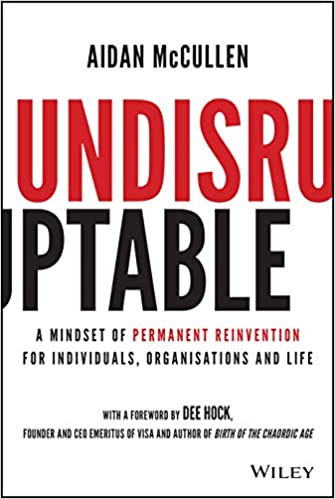
Undisruptable: A Mindset of Permanent Reinvention for Individuals, Organisations and Life, by Aidan McCullen. Aiden knows something about reinvention. He had finally achieved his dream of becoming a professional rugby player, when injury forced him to completely rethink his life’s journey and turn to business—and writing, where he is a master of analogy.  (We personally like to think of analogy as one of our favorite mental sports!) As Aiden observes: “Rather than a rigid set of frameworks or business models, I present the book as a series of mental models. To bring these mental models to life, I offer analogies from nature, anecdotes from business, ancient wisdom, exemplars of perpetual change and evidence from evolution, neuroscience, business and life.” Aiden’s goal is to help you adopt a mindset of permanent reinvention. Enjoy!  

Teach Your Kids This Simple Strategy for Improving Focus

Here is a wonderful article by Deborah Farmer Kris about using the Pomodoro Technique to help reduce stress while getting schoolwork done with ease. Kris’s article hooks from the very beginning:

 “‘I just can’t make myself get started,’ a high school senior told me. She was sitting in my office in obvious distress. College deadlines were approaching, and all she had for an essay were a few scattered notes. 

“‘Try a Pomodoro,’ I suggested. ‘Right here, right now. I’ll set the timer for 25 minutes. You don’t have to finish your essay — just work on it till the timer goes off, then take a break.’

“Twenty-five minutes later, she looked up. ‘OMG. I’m half-way done. That totally worked!’

“When faced with a task you are dreading or that seems overwhelming, the hardest part is usually just getting started. And this is the space where so many of the parent-child homework battles live.

“The single most concrete, effective tool I’ve found for starting a task and remaining focused on one’s work is the Pomodoro Technique. Alas, I was twice my student’s age before I heard about this strategy. During an interview with Barbara Oakley—author and creator of the wildly popular Learning How to Learn MOOC—she shared with me that of all the techniques she teaches in that course, the Pomodoro Method is ‘far and away’ the most popular.

Education Endowment Foundation Teaching and Learning Toolkit

This fascinating website points toward independently evaluated projects or materials, focusing on 14 high priority issues. or themes, for schools. “The themes provide greater depth to the evidence on common school challenges by linking together evidence in the Toolkit with key messages emerging from [Education Endowment Foundation] EEF-funded projects, and other resources. Taken together, they provide a rich picture of the developing evidence base on how to improve the attainment and wider outcomes of children and young people. These themes were developed in collaboration with teachers and school leaders in response to demand for evidence around specific school challenges.”

This is very fun to poke around with! 

MOOC of the Week

We’d like to recommend the fascinating, highly rated MOOC “Sheep in the Land of Fire and Ice,” put forth by the University of Iceland and co-starring one of our favorite instructors, David Hik, who also co-taught the wonderful Mountains 101 course. While reading last week’s superlative The Cattle Kingdom: The Hidden History of the Cowboy West, we learned a little about sheep’s sometimes inexorably pernicious effects on grasslands—”Sheep in the Land of Fire and Ice” delves further into this phenomenon—and how to resolve it.

That’s all for this week. Have a happy week in Learning How to Learn

*******AND, stay tuned for next week’s big announcement!!!!*******

Barb, Terry, and the entire Learning How to Learn team

The Cattle Kingdom

Cheery Friday Greetings to our Learning How to Learners!

Book of the Week

The Cattle Kingdom: The Hidden History of the Cowboy West, by Christopher Knowlton. What an eye-popping read! Many North Americans grow up familiar with cowboys, cattle barons, and the battle of barbed wire fences in the Western US, along with haute cuisine (at least as haute as American cuisine could get) at the legendary Delmonico’s Steakhouses in New York City. And North Americans know at least a little about the meatpacking industry of Chicago and its accompanying scandals.  They may even be familiar with iconic, laconic, literary figures like Shane and the Virginian (an apparent legacy of European aristocracy). 

But until the publication of The Cattle Kingdom, few of us had the opportunity to put together the disparate pieces to understand this important era in US history. We know why the buffalo disappeared (a horrific addendum to the genocidal predations on Native Americans), but Knowlton helps us understand how cattle arose so quickly to take the place of buffalo, why the life of a cattleman became so popular, and how the whole enterprise came crushing finale with the Johnson County war, when local newspapers essentially owned by the elite, wealthy cattlemen spurred an insurrection allowing them to quite literally get away with murder.

This is an in-depth look at virtually every aspect of the history of the cowboy west, from the major players (including fascinating discussions of Teddy Roosevelt, the father of the American conservation movement),  to saddles, barbed wire, the economics of cattle rearing, British attitudes of “I can do what I want with my land,” and of course, the “Big Die Up,” where millions of cattle died in one horrific winter—officially sealing the end to the cattle kingdom. From about 1850 to 1900, the US Kingdom of Cattle was the equivalent to today’s Silicon Empire. A remarkable work of history. Also great for audio listening. [Hat tip, Ryan Holiday.]

Aiden McCullen and Barb Oakley Discussing Barb’s New Book, Learn Like a Pro 

Here is a discussion with one of our favorite podcast hosts, Aiden McCullen, surrounding the key ideas of Barb’s upcoming book Learn Like a Pro, (St. Martin’s Press, June 1st, 2021).  More to come as we get closer to launch, but learners looking for a brief introduction to how to learn more effectively using the latest insights from neuroscience couldn’t do better than to read Barb’s latest book, co-written with her good friend, learning expert Olav Schewe. This excellent article by Aiden expounds on the ideas of Learn Like a Pro and how they are important in business.

Learn with Class Central: Join our Study Group

Class Central is experimenting with an unofficial semi-synchronous study group for the Mountains 101 course from the University of Alberta. This venture looks so fun and interesting that Barb has also joined the group.  But far better is that David Hik—one of the instructors and co-creators of Mountains 101—will also be in our study group. What could possibly be better?  Join us there!  

‘Pedagogy and Practice when Teaching Online’ webinar taking place June 10th via the University of Kent

Phil Anthony, a learning technologist at the University of Kent (UK), has set up a new ‘Digitally Enhanced Education Webinars series’ as an opportunity to share examples amongst colleagues when using digital technologies for teaching. As the primary goal was to create a large sharing community, the university decided to open the series to colleagues outside of the University of Kent. The free webinar series has become really popular. The idea is to listen to and learn from brief, 15-minute talks with the best ideas from a variety of speakers about good online teaching. 

Barb will be speaking on June 10th at 12:30. If you would like to attend the webinar, please register your interest here, and you’ll receive more information. If you yourself would like to present and share, please fill out this form to join the fun!

That’s all for this week. Have a happy week in Learning How to Learn!

Barb, Terry, and the entire Learning How to Learn team

The Book of Why

Cheery Friday Greetings to our Learning How to Learners!

Book of the Week

The Book of Why: The New Science of Cause and Effect, by computer scientist and philosopher Judea Pearl. For anyone with the slightest interest in statistics, mathematics, or figuring out whether the public is being duped by yet another “solidly researched” fad, this book is for you.  Judea himself observes “In Statistics 101, every student learns to chant, ‘Correlation is not causation.’ With good reason! The rooster’s crow is highly correlated with the sunrise; yet it does not cause the sunrise. Unfortunately, statistics has fetishized this commonsense observation. It tells us that correlation is not causation, but it does not tell us what causation is. In vain will you search the index of a statistics textbook for an entry on ‘cause.’ Students are not allowed to say that X is the cause of Y—only that X and Y are ‘related’ or ‘associated.’

But, in large part due to Pearl’s research, “…things have changed dramatically in the past three decades. Nowadays, thanks to carefully crafted causal models, contemporary scientists can address problems that would have once been considered unsolvable or even beyond the pale of scientific inquiry. For example, only a hundred years ago, the question of whether cigarette smoking causes a health hazard would have been considered unscientific. The mere mention of the words ‘cause’ or ‘effect’ would create a storm of objections in any reputable statistical journal. Even two decades ago, asking a statistician a question like ‘Was it the aspirin that stopped my headache?’ would have been like asking if he believed in voodoo. To quote an esteemed colleague of mine, it would be “‘more of a cocktail conversation topic than a scientific inquiry.’ But today, epidemiologists, social scientists, computer scientists, and at least some enlightened economists and statisticians pose such questions routinely and answer them with mathematical precision. To me, this change is nothing short of a revolution. I dare to call it the Causal Revolution, a scientific shakeup that embraces rather than denies our innate cognitive gift of understanding cause and effect.”

We love this book, which explains the new science of causality in a straightforward fashion. You’ll find yourself thinking about correlations—and causations—in a new way.   

ASEE Presents: Barb’s Synchronous Master Class On Effective Teaching

Coming up by popular demand, Barb and her colleagues Beth Rogowsky and Chris Kobus will be doing the second live webinar presenting practical insights and ideas from their groundbreaking new book Uncommon Sense Teaching. The workshop will be held on June 21, 22, & 23, 2021 from 12:00 – 4:00 PM, ET. It will give an in-depth and counterintuitive look at how many approaches previously thought to be helpful for learning can actually harm students’ ability to learn and turn them off on educational systems.  You will discover and review powerful new insights from neuroscience that provide practical tools to help your students learn more effectively.  Wherever and whatever you teach, you will find this workshop provides great new insights on learning that aren’t contained in Learning How to Learnor anywhere else. This is a great way to gain fresh perspectives on teaching over the summerand have fun while you are at it! This is a great way to gain fresh perspectives on teaching over the summerand have fun while you are at it! Space is limited, so reserve your seat now

Barb in Europe in September/October 2021

Barb will be resuming her international travels by speaking for the Federal Congress for Protestant Schools in Dresden on September 30 and October 1, 2021. If you are interested in her speaking at an event in Europe in the last two weeks of September or the first two weeks of October, please reach out here

Kati Kariko Helped Shield the World From the Coronavirus

This amazing story describes how Kati Kariko laid the foundation for the stunningly successful vaccines made by Pfizer-BioNTech and Moderna. Notice how Kati had to fight against an enormous array of top-flight experts who couldn’t be bothered to believe there was something to her research.  

Wonderful Overview Graphic of Learning How to Learn

Here’s a fabulous infographic by Outerbridge of our Learning How to Learn course—there’s also a great accompanying synopsis of the key ideas in our course.  Enjoy!

Our Apologies for Last Week’s Bad Link 

We loved the article “How Coining a Phrase Can Lead to an Inigo Montoya Moment,” but sadly, the link we provided was a bad one. Now you have the right one to help satisfy your curiosity!

That’s all for this week. Have a happy week in Learning How to Learn!

Barb, Terry, and the entire Learning How to Learn team

Out on Good Behavior: Teaching Math while Looking Over Your Shoulder

Cheery Friday Greetings to our Learning How to Learners!

Book of the Week

Out on Good Behavior: Teaching Math while Looking Over Your Shoulder, by Barry Garelick. We greatly enjoyed and got a lot out of this brief, sardonic memoir of an outstanding math teacher in an era when teaching math in public schools is becoming increasingly divorced from what neuroscience has revealed about how students actually learn math. Garelick’s witty observations give a sense of what’s going on in a way that would be difficult for most parents to discover—and some of Garelick’s observations are priceless: “I once told my eighth-grade algebra class that my classroom is one place where they won’t hear the words ‘growth mindset’—to which the class reacted with wild applause. Someone then asked what my objections to ‘growth mindset’ were.  I said I didn’t like how it was interpreted: Motivational cliches like ‘I can’t do it…yet’ supposedly build up confidence leading to motivation and success. I believe it’s the other way around: success causes motivation more than motivation causes success. [Or, as researchers Szu-Han Wang and Richard Morris have noted: “we rapidly remember what interests us, but what interests us takes time to develop.” And this Slate Star Codex article about growth mindset remains timeless.] 

Garelick presciently observes: “Where students frequently see through ineffective educational fads, people in education—after buying into such theories—see what they want to see.” Out on Good Behavior is well worth reading if you care about what your child is learning—or not learning—in school, particularly when it comes to math.

An Important Key to Finland’s Vaunted Education System

Mathematics professor Robert Craigen has observed that a US degree in math education is “practically free of any content that would qualify one for the professional designation of ‘mathematician.’” This means that math educators within the US know little to nothing of any form of higher-level math. It could be reasonably argued that schools of education have a vested interest in ensuring that teachers take plenty of credits in teacher preparation and “teacher-lite” math, as opposed to the tougher math courses demanded of regular college math students. 

As this fascinating comparison of Kumon and Russian forms of mathematics notes: “…a recent evaluation of elementary mathematics training found only one percent of traditional graduate teaching programs [within the US] earned an A for adequately covering critical math content.” 

By contrast, Finland’s vaunted educational system requires elementary, middle, and high school teachers to receive an entire undergraduate degree in their subject—not a watered-down set of a few simplified courses—before going on to receive their master’s degree in teaching. This puts teachers in Finland on par with professionals such as doctors and lawyers. (Only preschool teachers in Finland require BA in education.)

For more information about Finland’s educational system, see:

  • Teacher education in Finland
  • Teacher Status in Finland (Google for Education) Notably, 40% of students in Finland take the vocational upper secondary studies tract, which means that Finland is ensuring a straightforward pathway for vocational students—unlike the US. As the report notes: “Completion of the Finnish Matriculation Examination (undertaken in the General upper secondary education tract) or a post-secondary level vocational qualification provides general eligibility for higher education (which is also free of charge though highly competitive).” In other words, everybody deserves the right to a free education, but you’d better prove yourself worthy of taxpayer’s money if you want to get it.

Would higher teacher salaries for US teachers encourage movement toward a Finnish type, higher quality education system that earned more societal respect? Or would a higher salary without a shift to higher expectations in teacher training and qualifications simply eliminate any incentive to improve the current US system? Fans of Finnish methods of teaching like to bring to our attention that the Finnish system places great trust in their teachers to be doing the right thing without testing and comparisons.  But such trust is not given lightly—teachers clearly must do a great deal to earn that trust. Americans thinking they can just stride right in and be like the Finns by removing tests and comparisons —without upgrading the training and character expected of teachers under the Finnish system—are clearly setting up US systems for even more problems.

[Hat tip, Professor Kenzen Chen]

As we observed in a Cheery Friday email nearly five years ago, it’s important to realize there is much controversy about Finland’s educational “achievements.” Finland has scored high on PISA, but lower on other internationally recognized tests. In fact, while countries like Chile and Korea have increased by more than 20 points for their 8th-grade students over the past decade on the 2011 TIMSS test, Finland’s performance has declined by an eye-opening 38 points.

Some see PISA as skewing their assessments to favor countries that conform to specific theories espoused by the Organisation for Economic Co-operation and Development, which runs PISA. Professor Yong Zhao, author of Who’s Afraid of the Big Bad Dragon?: Why China Has the Best (and Worst) Education System in the World (a book we hold in high esteem), argues here that PISA results should be ignored entirely. He is not alone in his criticism. You might be surprised to learn, as Professor Zhao discusses in his book, that students in different countries can get quite different questions on the PISA—meaning that entire countries can vary markedly in their rankings due to behind-the-scenes decisions on which questions to score and include. If you have an interest in the testing controversy, check out our friend Manabu Watanabe’s series of intriguing articles and follow the links. See also “Exceptional Learning Results From Exceptionally Good Textbooks: Singapore Yes! Finland No!

Old-fashioned Math Tutoring Website

As Ivy Style clothiers notes: “Everyone Is right wing when it comes to the things they care about.”  In other words, “when people are passionate about something—baseball, poetry, clothing—they tend to venerate tradition, to wish to conserve and maintain established standards of excellence, and to resist change.”  Whatever your inclinations, if you really want your child to learn math, you may wish to check out this old-fashioned math tutoring website, which features tutors with expertise in math that’s virtually unequalled by most of today’s US math teachers. (Keep in mind that Barb’s previous work as a Russian translator aboard Soviet trawlers during the Cold War have made her particularly attuned to the perils of indoctrination qua education.)

Experience: Being a Bartender in Antarctica

Speaking of adventures, it’s our opinion that there’s little that beats adventure to help keep your mind open to new learning. As long time LHTLers know, Barb met her Hero Husband at the South Pole Station in Antarctica—this article gives a bit of a sense of what it was like: 

“I’d wanted to visit Antarctica ever since I was a child, but in the end it was a wearying job in Silicon Valley that led me to make the leap. After a particularly bad day at the office, I thought, “Where’s the farthest I can go to get away?” To my delight, a quick internet search revealed work was available at three US research stations. I convinced the right people I was the man they needed to look after the liquid nitrogen and helium used as coolants for the radio telescopes at the South Pole Station.

“The bar there, probably the most remote on Earth, was called Club 90 South. Despite being surrounded by ice for 800 miles in every direction, and 8,000 miles away from the local bars I knew, it seemed completely familiar to me: there were six bar stools, a scattering of tables and couches, a pool table, TV and music….”

Ah, memories! Are you at a point where you are thinking to try a memorable experience?  Let this be your nudge…

Last But Not Least!

Here’s a fine write up by Coursera about a talk Barb recently gave for Courserians: Connecting the Dots: Dr. Barbara Oakley on the Science of How We Learn. Enjoy!

That’s all for this week. Have a happy week in Learning How to Learn!

Barb, Terry, and the entire Learning How to Learn team

Heroes & Hormones

Cheery Friday Greetings to our Learning How to Learners!

Book of the Week

Heroes & Hormones: From Screen Slave to Superhero, by Mali Alcobi.  Mali is an expert in  work-life balance who helps both employees and organizations develop systems that help people lead productive, yet happy lives.  Mali speaks around the world on this topic—which is how Barb happened to meet her and to read her book. Heroes and Hormones is one of those deceptively simple reads that teaches a few critical points—like how to train yourself to prioritize family even as you are pulling your weight at work.    This book also has a good review of what you need to be doing healthwise, from exercise to the right foods, to keep your life on track—and not wake up one day at your seeming career peak only to find your family has given up on you, and your body is beginning to show the aftereffects of too much stress and too little care. This quick read will help you balance your priorities with dozens of practical tips.  

Mali is the founder of Dynamix – Work-Life Balance. Barb and Mali will be speaking for Microsoft together next month—Barb can say with confidence that Mali is a great choice if your company is looking for a work-life balance speaker.   

200+ Hours of FREE Conference Recordings on Online Learning

This excellent article by Heba Ledwon of Class Central provides links to hundreds of hours of information, up-to-the-minute insights on online learning from top conferences around the world. As Heba points out “Class Central contributed to a number of events. 

Also check out the presentation by Class Central’s Dhawal Shah at Learning with MOOCS VII on the recent development of the MOOC world.”  Take a look at all the MOOCs Dhawal has done—it’s no wonder Class Central is so in-the-know!

Massive List of Thousands of Free Certificates and Badges

And Class Central knocks it out of the park again with this listing of thousands of courses with free certificates and badges offered by MOOC platforms, universities, companies, and nonprofits worldwide. Our thanks to authors Rui Ma & Heba Ledwon for pulling this useful compendium together!

The Ultimate Deliberate Practice Guide: How to Be the Best

Here is a wonderful overview by Farnam Street of deliberate practice. “Deliberate practice means practicing with a clear awareness of the specific components of a skill we’re aiming to improve and exactly how to improve them. Unlike regular practice, in which we work on a skill by repeating it again and again until it becomes almost mindless, deliberate practice is a laser-focused activity. It requires us to pay unwavering attention to what we’re doing at any given moment and whether it’s an improvement or not.”  If you are trying to improve in any area, let this article be your guide.

How Coining a Phrase Can Lead to an Inigo Montoya Moment

Okay, we’re not only fans of etymology–we’re also fans of the movie and book The Princess Bride.  So we really enjoyed this article on the term “to coin a phrase,” which can mean, on the one hand, “to use a cliché,” and on the other, “to create a new phrase,” Say what–aren’t those two meanings the opposite of one another?  Teasing out what’s actually going on is why we so enjoyed reading this article.

Course Hero, Meet CourseVillain

This is a fascinating article about how technology can be used to ferret out whether your tests and projects might be being posted online against your wishes.  Personally, we favor making tests and old classwork available for other students–it helps level the playing field and prevents cliques with special inside knowledge from having a special advantage that outsiders or newcomers don’t have. This is why we’re such big fans of Course Hero.  No surprise, Course Hero, great company that they are, are working graciously with CourseVillian to try to ensure that professors can easily see if there’s material they want removed.  Five stars to Course Hero!  

That’s all for this week. Have a happy week in Learning How to Learn!

Barb, Terry, and the entire Learning How to Learn team

You Never Forget Your First

Cheery Friday Greetings to our Learning How to Learners!

Book of the Month

You Never Forget Your First: A Biography of George Washington by Alexis Coe.  If you’re a history buff, as we are, you will get a lot out of Coe’s seemingly lighthearted and oft-times irreverent look at George Washington.  We’ve long wished for a fairly dispassionate book about Washington that discussed his good and bad sides without taking snide potshots or putting him on a pedestal. Alexis Coe’s book walks that fine line—perhaps most importantly, she is able to outline Washington’s integrity combined with a deep-rooted racial hypocrisy that is sometimes quite breath-taking. Here’s a sample from the book’s beginning that gives a sense of Coe’s delightful, but deeply thought-provoking alternative take on America’s leading founder: 

“All of the Founding Fathers have problems. Thomas Jefferson strikes modern audiences as beyond hypocritical, John Adams as tiresome, and James Madison as downright boring. But according to Washington’s own biographers, he’s in real trouble. Joseph Ellis calls him ‘the original marble man.’ Ron Chernow says he is ‘composed of too much marble to be quite human.’ Harlow Giles Unger says he’s ‘as stonelike as the Mount Rushmore sculpture.’ What is to blame for Washington’s inhuman stature? Well, for starters, his renowned self-control. ‘My countenance never yet betrayed my feelings,’ Washington once said. That was an exaggeration, but he was discreet enough to land himself, as Richard Brookhiser has lamented, in ‘our wallets, but not our hearts.’ Every biographer humbly endeavors to break Washington out of his sepulchre—by proceeding in almost the exact same way as the one who came before him. First, his biographers stick a portrait of the man Ellis calls America’s “‘foundingest father’ on the cover. Many favor Washington’s most iconic image, his rigid and gloomy face on the one-dollar bill, but most prefer a painting that shows his whole body, because his thighs drive them wild. Brookhiser, examining a portrait from 1792, can’t help but notice how ‘well-developed’ they are. Ellis admires how they ‘allowed him to grip a horse’s flanks tightly and hold his seat in the saddle with uncommon ease.’ For Chernow, Washington’s “‘muscular thighs’ were just the beginning. He was a ‘superb physical specimen, with a magnificent physique . . . powerfully rough-hewn and endowed with matchless strength. When he clenched his jaw, his cheek and jaw muscles seemed to ripple right through his skin.’ They pair that visual coffin of a cover with a verbal coffin of a title, often adhering to the same stale format. George Washington: A Biography. George Washington: A Life. George Washington: A President. The more adventurous among them might throw in a hyperbolic word or two (Destiny! Power! Genius!) or a phrase borrowed from Washington’s time, immediately lost on potential new readers (‘His Excellency’ or “‘For Fear of an Elected King’). With titles this stodgy, presidential biographies will always appear as if they are for men of a certain age, intended to be purchased on Presidents’ or Father’s Day. The Thigh Men, as I came to think of these kinds of biographers over the years, are a decidedly ‘size matters’ crowd. Chernow’s book on Washington, which won the Pulitzer Prize, clocks in at almost a thousand pages, a record among single-volume editions on our first president—in no small part because it takes every opportunity to remind readers that the great general was very, very manly.”

Interview with Barb on MyTutor

Here’s Barb’s recording with Bertie Hubbard, MyTutor’s wonderfully upbeat and inspiring CEO. This presentation gives a swift review of key ideas related to learning that might be very helpful for you to watch with your child, children, or students. MyTutor is a fabulous tutoring organization in the UK, so it’s worth checking out if you would like help in learning for a youngster.  

Nelson’s Everest Memory Masterclass

Nelson’s Everest Memory Masterclass saw great success during his last cohort a couple of months ago. Due to popular demand, he’s re-opening the class for a limited time. It’s a great class that teaches the basics of memory techniques all the way to the more complex. From how to remember your life, where you put your keys, people’s names and faces (with or without masks on!), to remembering numbers, speeches, and passwords, Nelson’s class has it all! Register here.

On Course 

We’ve long been fans of On Course, which provides practical insights on how to keep students on track in their learning.  The upcoming April 29-May 1st On Course National Conference offers many breakout sessions modeling engaged virtual learning, with an opening keynote by Dr. Nicole McDonald, author of Becoming a Student-Ready College as well as a closing keynote on Equity in Virtual Learning by Dr. Jonathan Brennan, author of Engaging Learners through Zoom

Also, If you (or any of your colleagues) would like to attend the April 29th 1-Day Engaging Learners through Zoom workshop, you can register or learn more.  As one attendee has observed, “If you don’t rate this session a 10, you weren’t paying attention.”

Isambard Kingdom Brunel—One of History’s Greatest Engineering Geniuses

We happened to stumble on this wonderful article about another of our favorite historical charactersIsambard Kingdom Brunel, who, along with his father, Sir Marc Isambard, created some of the greatest engineering advances in history, including  the construction of the Thames Tunnel,the Great Western Railway (GWR), the first propeller-driven transatlantic steamship, and many famous bridges, all of which helped revolutionize public transport and modern engineering.  Isambard Kingdom Brunel was unquestionably the Elon Musk of his age. 

That’s all for this week. Have a happy week in Learning How to Learn!

Barb, Terry, and the entire Learning How to Learn team

CorkScrew Solutions

Cheery Friday Greetings to our Learning How to Learners!

Book of the Week

CorkScrew Solutions: Problem Solving with a Twist, by Clarke Ching. We love Clarke Ching’s writing, so we’d probably read a book of his even if it was about dirt.  But in fact, this latest book by Clarke is a delightful, quick, and highly informative read about how to solve problems when any approach you take to solving the problem has a major drawback. You’ll find a valuable set of tools—enjoy!

Living a stress-free life may have benefits, but also a downside

We’ve long wondered that people with stressful jobs where you have to think quickly, like emergency room physicians, often seem to be more on the ball cognitively.  It’s almost a chicken and egg situationdo they seem smarter because they’re naturally smarter (there’s a lot of filtering through the process of becoming a doctor, after all). Or do they seem smarter because the job itself makes them smarter? This informative press release about new research sheds light on this process. Key grafs:  “Stress is a universal human experience that almost everyone deals with from time to time. But a new study found that not only do some people report feeling no stress at all, but that there may be downsides to not experiencing stress.

“The researchers found that people who reported experiencing no stressors were more likely to experience better daily well-being and fewer chronic health conditions. However, they were also more likely to have lower cognitive function, as well.

“David M. Almeida, professor of human development and family studies at Penn State, said the study suggests that small, daily stressors could potentially benefit the brain, despite being an inconvenience.”

A conversation between Barb and concert pianist Monika Mašanauskaitė

This podcast, with exceptional pianist Monika Mašanauskaitė, dives into the important differences between the procedural and declarative learning systems.  Among other topics, we explore whether cramming is possible in procedural learning.

Stanford researchers identify four causes for ‘Zoom fatigue’ and their simple fixes

Here is one of the most informative articles we’ve seen on why Zoom fatigue happens, and how to avoid it:

“Excessive amounts of close-up eye contact is highly intense… Both the amount of eye contact we engage in on video chats, as well as the size of faces on screens is unnatural.

“In a normal meeting, people will variously be looking at the speaker, taking notes or looking elsewhere. But on Zoom calls, everyone is looking at everyone, all the time. A listener is treated nonverbally like a speaker, so even if you don’t speak once in a meeting, you are still looking at faces staring at you. The amount of eye contact is dramatically increased. “Social anxiety of public speaking is one of the biggest phobias that exists in our population,” Bailenson said. “When you’re standing up there and everybody’s staring at you, that’s a stressful experience.”

“Another source of stress is that, depending on your monitor size and whether you’re using an external monitor, faces on videoconferencing calls can appear too large for comfort. “In general, for most setups, if it’s a one-on-one conversation when you’re with coworkers or even strangers on video, you’re seeing their face at a size which simulates a personal space that you normally experience when you’re with somebody intimately,” Bailenson said.

“When someone’s face is that close to ours in real life, our brains interpret it as an intense situation that is either going to lead to mating or to conflict. “What’s happening, in effect, when you’re using Zoom for many, many hours is you’re in this hyper-aroused state,” Bailenson said.

Solution: Until the platforms change their interface, Bailenson recommends taking Zoom out of the full-screen option and reducing the size of the Zoom window relative to the monitor to minimize face size, and to use an external keyboard to allow an increase in the personal space bubble between oneself and the grid.”

How to Approach Peer-Assessed AssignmentsThe Problem of Cheating.

This useful checklist by MOOC maven Pat Bowden gives insight into how to write peer-assessed assignments.  Pat has also written an outstanding article describing the problems with cheating/plagiarizing on online courses.  This problem started out bad when MOOCs first began, and has only been getting worse since.  We suspect that the first MOOC platform to successfully solve the cheating and plagiarizing problem in more than a simply cosmetic way will see the value of their certificates increase significantly.

Five Tips for Improving Memory and Recall

Here’s an overview article by Barb in DIY Genius on staying focused and being productive on the job and while learning. Key grafs:

“Just like some people are taller and some people are shorter, people also differ in making long-term memory links. For some people, it’s simple, and for others, it takes more time and effort. Personally, I don’t have a very good long-term memory, so I have to go over something many times to remember it, which makes spaced repetition invaluable to me.

“With spaced repetition, you’ll go over something 5-10 times before you put it away, and then you’ll go over it again a few more times the next day. This requires you to practice recalling information over a longer time, strengthening those connections in your memory. 

“If you want to remember something for a year, you probably want to repeat it until you’ve got it down pretty well. The goal is to call it back to mind just as you’re about to forget it, so maybe you would practice recalling it every few weeks or so. This kind of spaced repetition is an excellent tactic for ensuring you’ve got that information stored in your long-term memory.”

That’s all for this week. Have a happy week in Learning How to Learn!

Barb, Terry, and the entire Learning How to Learn team