Author: barboakley

Barbara Oakley, PhD, PE is a Professor of Engineering at Oakland University in Rochester, Michigan; Michigan’s Distinguished Professor of the Year; and Coursera’s inaugural “Innovation Instructor.” Her work focuses on the complex relationship between neuroscience and social behavior. Dr. Oakley’s research has been described as “revolutionary” in the Wall Street Journal. She is a New York Times best-selling author who has published in outlets as varied as the Proceedings of the National Academy of Sciences, the Wall Street Journal, and The New York Times. She has won numerous teaching awards, including the American Society of Engineering Education’s Chester F. Carlson Award for technical innovation in engineering education and the Institute of Electrical and Electronic Engineers William E. Sayle II Award for Achievement in Education. Together with Terrence Sejnowski, the Francis Crick Professor at the Salk Institute, she co-teaches Coursera – UC San Diego’s “Learning How to Learn,” one of the world’s most popular massive open online courses with over three million registered students, along with a number of other leading MOOCs. Dr. Oakley has adventured widely through her lifetime. She rose from the ranks of Private to Captain in the U.S. Army, during which time she was recognized as a Distinguished Military Scholar. She also worked as a communications expert at the South Pole Station in Antarctica, and has served as a Russian translator on board Soviet trawlers on the Bering Sea. Dr. Oakley is an elected Fellow of the American Institute for Medical and Biological Engineering and of the Institute of Electrical and Electronics Engineers and the American Institute for Medical and Biological Engineering.

Making Math Click: Understand Math Without Fear!

Cheery Friday Greetings from Barb Oakley! 

Something Big Is Coming: Making Math Click: Understand Math Without Fear!

We’ve been quietly building something we think you’ll love: Making Math Click: Understand Math without Fear, our brand-new MOOC designed to help learners truly understand—and maybe even enjoy—math. Together with Canadian mathematician John Mighton (cofounder of JUMP Math), Barb will help will give you insights that can help you know how to learn—or teach–the foundations of math.  If you’ve ever seen a student’s eyes glaze over at the mention of fractions, fear not. This course brings together the best insights from neuroscience and teaching to make those “aha!” moments a lot more common.

Expect engaging visuals, concrete strategies, and yes—even a little math fun. The course launches on July 31st.   You can sign up here. Come join us as we help math finally click!

What AI and Your Brain Secretly Have in Common (And Why It Matters More Than Ever)

Last week I had the chance to speak at the AI Sandbox in Nelson, New Zealand—a grassroots group doing some remarkable things to help everyday folks explore AI. But the real treat wasn’t just talking about transformers or neurons (though yes, we went there). It was seeing the light bulbs go off as we explored how deeply intertwined neuroscience and AI really are—and why that matters for learning today.

Here’s the short version: our brains and AI models both rely on building and strengthening networks. And just like students can’t truly learn without forming solid links in long-term memory, AI can’t do much without a well-trained web of connections either. The parallels are fascinating—and practical.

If you’re curious, you can watch the full talk here. We covered everything from the surprising role of memory in critical thinking to what AI can (and can’t) teach us about how we learn.

And here’s a related update I’m especially grateful to share: “The Memory Paradox,” our new chapter on why knowledge stored in your own brain still matters—even in the age of ChatGPT, has now been downloaded over 10,000 times on SSRN alone. That’s a huge number for a working paper. It suggests that this question—how memory and intelligence connect in an AI-saturated world—is resonating with a lot of thoughtful readers. (You can still read it here if you missed it: The Memory Paradox).

Back to Nelson: the AI Sandbox itself is what I’d call a macroscope—a community-powered lens that lets us zoom out and really see the bigger picture in education, AI, and beyond. It’s a brilliant model of how grassroots learning can ignite national conversations.

Of course, none of this would have happened without the New Zealand Initiative. They’re the ones who brought me to New Zealand as an educational change agent to speak all around the country for six months. Their commitment to evidence-based policy and real educational impact is something truly special.

Two Talks in Dunedin—Yes, It’s Worth the Trip!
If you’re anywhere near Dunedin—or even if you’re much farther afield—it’s absolutely worth it. One survey respondent from one of my recent international talks wrote, “It was worth flying 16 hours just to come to this talk alone.” 

  • Plenary at the Math Association of New Zealand’s biennial conference — held just once every two years, this gathering runs July 1–3, 2025 in Ōtepoti (Dunedin) at St Hilda’s Collegiate School. On July 1, I’ll be sharing classroom-proven scaffolding strategies for the ever-challenging topic of division—because yes, it can be a favorite topic when we teach it right! We’ll also be diving even deeper into the idea of paradigm cartels,  how they can subvert progress in education, and how YOU can make a difference. Register here. 
  • Logan Park High School event — open to both parents and teachers, this talk happens on Saturday, June 28, 2025, at Logan Park High School in North Dunedin. We’ll explore effective learning and teaching methods—covering memory, motivation, habit—and why some strategies stick (while others sink). Register here.

So come for the ideas, stay for the scenery—Dunedin is stunning this time of year. Whether you’re an educator or a family member, I hope to see you there!

That’s all for now. Have a happy month in learning!

Barb Oakley

Why IQ Scores Are Dropping

Cheery Friday Greetings from Barb Oakley! 

Why IQ Scores Are Dropping: A New Neuroscientific Explanation for a 50-Year Mystery

What if I told you that well-meaning Western educational reforms and our smartphone habits might actually be making us less intelligent? New research suggests that’s exactly what’s happening. 

Our new chapter, “The Memory Paradox: Why Our Brains Need Knowledge in an Age of AI,” provides the first solid, neuroscience-based explanation for why IQ scores have been mysteriously declining across Western nations for the past 50 years, even as technology has exploded around us. This research will appear in the upcoming Springer Nature volume The Future of Artificial Intelligence: Economics, Society, Risks and Global Policy, edited by Max Rangeley and Lord Nicholas Fairfax.

Here’s what we discovered: The very educational reforms that promised to make us smarter—particularly the widespread rejection of memorization as “rote learning” and the shift toward “critical thinking skills,” combined with our increasing reliance on external devices—may actually be undermining our cognitive abilities. When we constantly offload thinking to calculators, smartphones, and AI, we’re not just changing where information is stored. We’re bypassing the brain’s natural learning mechanisms that build the neural architecture necessary for genuine understanding and insight.

The chapter traces how this “cognitive offloading” disrupts everything from forming robust mental frameworks to developing intuitive expertise. When students never memorize math facts because “they can always use a calculator,” or when we “just Google it” instead of wrestling with information internally, we may be weakening the very cognitive foundations that enable advanced reasoning. The timing is telling: the cohorts showing declining IQ scores were precisely those educated when memorization was not just abandoned but actively demonized, and digital dependence took hold.

The good news? This isn’t about rejecting technology or returning to mindless drilling. Drawing from these neuroscientific insights, we can learn to use powerful tools as supplements to, rather than replacements for, robust internal knowledge. Understanding this delicate balance between external tools and internal memory will be crucial as we navigate the age of ChatGPT and generative AI.

Read the full paper here: The Memory Paradox: Why Our Brains Need Knowledge in an Age of AI.

Ready to Reclaim Your Memory? Here’s How to Start

If our chapter made you think twice about how much you’re outsourcing to AI, here’s something to bring it back home—literally, to your own brain. My friend Nelson Dellis is a 6x USA Memory Champion and one of the world’s leading memory experts. He doesn’t just talk about memory techniques—he lives them, performing jaw-dropping feats and teaching others to do the same.

His Everest Memory Masterclass is a practical, engaging course that teaches you how to remember names, numbers, to-dos, and anything else life throws your way. Nelson is both a phenomenal teacher and a trusted guide for anyone wanting to sharpen their mind.

The course opens officially on Monday, but if you join the waitlist now, you’ll get early access this Sunday—plus a few extra bonuses. These spots usually fill up quickly, so if you’ve ever wanted to learn the techniques memory champions actually use, don’t miss this opportunity.

Join the waitlist here: https://www.everestmemory.com/waitlist

Double Feature Friday! Two Sides of the Learning Coin

This week, I had the pleasure of diving into two very different conversations—one that’ll tug your heartstrings and another that might raise your eyebrows (in a good way).

Empathy, Engines, and a Dose of Real Talk

Ever noticed how sometimes being too nice can backfire? This week, I joined Joe Sanok on the Practice of the Practice podcast to chat about one of my favorite awkward topics: pathological altruism—aka when our best intentions accidentally make a mess. 

We talked about how over-empathizing in therapy can actually drag the therapist down, and how learning to take a step back—with sympathy instead of deep emotional mirroring—might just save one’s sanity. Therapists, take note: your ability to be a calm, clear presence is often more powerful than jumping headfirst into someone else’s emotional tornado.

Of course, we also squeezed in a few hits from the “Learning How to Learn” greatest hits album—like why rereading isn’t studying, and how a little retrieval practice goes a long way (yes, flashcards, but make them smart).

If you want to hear the full conversation—including a story about how a well-intentioned school study went sideways—you can listen here. Spoiler alert: sometimes the best way to help… is to pause and ask if you’re actually helping.

School Shorts with Melissa Chan-Green: Learning Differences & Superpowers

In this warm and inspiring chat with Melissa, we explored how the things that make learning hard—like ADHD or dyslexia—can actually turn out to be secret strengths. We talked about how I rewired my own brain at age 26 (math-phobe to engineering prof, anyone?), and why tiny habits like 20-minute daily practice can change lives. Parents and teachers, this one’s a hug in podcast form—with bonus tips on battling procrastination and helping kids thrive.

That’s all for now. Have a happy (rationally empathetic) week in learning!

Barb Oakley

A Revolution in Teaching: And We’re Just Getting Started

Cheery Friday Greetings from Barb Oakley! 

A Revolution in Teaching: And We’re Just Getting Started

Coursera celebrated Teacher Appreciation Day this week by recognizing a few of their instructors—and, yes, I was surprised (and slightly surreal-ed) to find myself leading the list.

What stood out, though, was what this moment reflects. For a long time, research has been the primary path to broad academic influence—shaping medicine, technology, policy, and more. Teaching has always had deep impact too—but historically, it’s been seen as more local, unfolding student by student, classroom by classroom.

That’s what’s changed.

With the rise of online learning, teaching now operates at the same scale as research. A thoughtfully designed course can reach learners across the globe and reshape how entire fields are understood—not just in one institution, but everywhere. It’s not that teaching is newly important. It’s that its reach has finally caught up with its value.

And here’s the thing: when teaching is excellent, it looks easy. The ideas feel clear. The path through the material seems obvious. But that clarity is the result of hard, often invisible work—carefully structuring content, anticipating confusion, smoothing rough edges. The better the teaching, the more likely it is to be taken for granted.

So here’s to the teachers—whose skill hides in plain sight, and whose work is quietly reshaping how the world learns.

What If “Good Teaching” Isn’t Good Teaching?

For decades, we’ve embraced bold reforms in education—more exploration, more tech, less memorization. But quietly, across much of the Western world, something strange has been happening: IQ scores are slipping.

At researchED Toronto 2025, I’ll be sharing a new theory—one that traces a subtle but powerful shift in how we teach and what it may be doing to how we think.

This conference brings together an extraordinary group of educators, researchers, and truth-tellers ready to challenge assumptions and spark change. Because sometimes the road to cognitive decline is paved with good intentions. Register now to learn more! 

Learn Faster. Remember More. It’s Not Magic—It’s Memory Mastery!

If you’ve ever wanted to sharpen your memory, learn faster, or actually remember what you study, you’ll want to check out what my friend Nelson Dellis is up to. He’s the current and 6x USA Memory Champion and one of the world’s leading experts on memory training.

Nelson is launching a brand-new round of his popular memory course, the Everest Memory Masterclass, on June 1st. It’s packed with the same techniques he’s used to memorize thousands of digits, names, faces, and more—and how you can apply them to everyday life, school, or work.

If you want early access and a chance at some special bonuses, hop on the waitlist here:
👉 https://www.everestmemory.com/waitlist

(Spots are limited, and it always fills up fast.)

Seeking Educational Consulting Support for a New Learning Institute in Kerala

Learning How to Learner Sudheer Mambra is embarking on an exciting educational journey! After a successful career in finance, he’s planning to establish an educational institution in Kerala, India that will help students prepare for professional accounting qualifications. Sudheer is deeply passionate about implementing evidence-based learning techniques, including spaced repetition and active recall, to help students truly master the material. He’s looking for someone who could provide practical guidance on applying these principles in real classroom settings—from curriculum design to lesson structure, assignments, and retention strategies. If you have expertise in developing educational programs that incorporate learning science principles and would be willing to lend your insights, please reach out to Sudheer at sudheermambra74@gmail.com. He’s particularly inspired by how understanding the neuroscience of learning can transform educational outcomes, and your experience could help shape this new venture!

That’s all for now. Have a happy week in learning!

Barb Oakley

Our Little Course, One Big Deal

Cheery Friday Greetings from Barb Oakley! 

And I’m a little early with this week’s Cheery Friday–flights will be catching me with dicey internet connections, so better to send early!

Our Little Course, One Big Deal

Who would’ve guessed? That quirky little course Learning How to Learn—the one you’re in right now—has just been named one of the top three online courses of all time by ClassCentral. Of. All. Time. (Take that, algorithms and cat videos!) This is a huge shout-out not just to the science behind the course, but to you—yes, you—the learner putting it into action. So pat yourself on the back, do a victory lap around your desk, and remember: you’re part of something big, brainy, and wonderfully weird.

Artem’s Mind-Blowing Videos

If you haven’t seen a YouTube video by Artem Kirsanov yet, drop everything (okay, finish your coffee first) and go watch one. Artem has this uncanny superpower: he takes wildly complex topics—like neural manifolds, memory encoding, and how AI and the brain overlap—and makes them not just understandable, but thrilling. His visuals don’t just decorate the science—they are the science, communicating deep ideas with such clarity and style you almost forget you’re learning something that could melt your brain in a textbook. Professors use his videos in university classrooms. Fellow science communicators use them to level up their own explanations. Artem isn’t just explaining science—he’s building the bridges that help others teach, learn, and leap forward. Bravo, Artem!

Reminder, Barb in Suzhou, China on April 12

Just a quick reminder–I’ll be speaking on April 12th in Suzhou, China at the East Asia Schools Conference.  (Here’s the English registration, and here is the Chinese registration.)

Feel free to read more about my work from a Chinese perspective by the ever-brilliant Ling Huang, here! 从学渣逆袭成工程学教授——美国的良知芭芭拉·欧科丽与你分享学渣逆袭为学霸的奥秘.(Sorry for the previous bad link!)

What a UNESCO Report on EdTech Can Teach Us

This week, a remarkable piece from Jon Haidt and Zach Rausch caught my attention. It’s about a new UNESCO book, An EdTech Tragedy, that quietly but devastatingly tells the story of how well-meaning efforts to digitize education during the pandemic went deeply wrong. The book is structured like a Greek tragedy—and rightly so. It begins with high hopes, moves through a slow unraveling, and ends in something close to despair.

What makes this account different is its tone. There’s no breathless outrage, no rhetorical overreach. Just careful attention to what actually happened—how we sidelined teachers, ignored what we knew about learning, and over-relied on devices that disconnected more than they helped. It’s a hard story, but one that offers space for reflection and, hopefully, better choices ahead. Worth your time.

Unlocking the Brain’s Secrets: A Deep Dive into Effective Learning

In a recent episode of the GOTO podcast, I had the pleasure of discussing the intricacies of how we learn with Charles Humble. We explored the brain’s dual modes of thinking—focused and diffuse—and how balancing these can enhance our ability to grasp new concepts. We also touched on the vital roles of deliberate practice, retrieval techniques, and the surprising benefits of integrating AI into educational practices. If you’re curious about optimizing your learning strategies and reinforcing your understanding the neuroscience behind them, this conversation offers valuable insights.

That’s all for now. Have a happy week in learning!

Barb Oakley

The Hidden Life of the Basal Ganglia

Cheery Friday Greetings from Barb Oakley! 

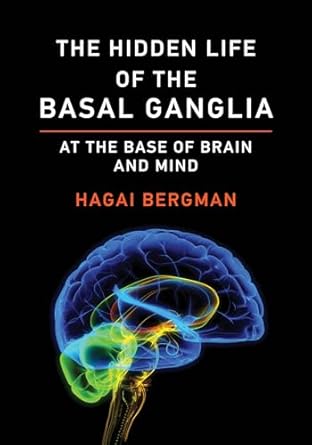
Book Pick: The Hidden Life of the Basal Ganglia by Hagai Bergman. If you’ve ever wondered about the backstage crew running the show of your everyday thoughts and actions, The Hidden Life of the Basal Ganglia is a fascinating peek behind the curtain. Hagai Bergman takes readers deep into this underappreciated yet essential brain region, revealing its role in one of our most crucial learning systems—habitual, non-conscious learning.

One of the delights of this book is Bergman’s use of metaphor, making the complexity of basal ganglia circuits surprisingly intuitive. My favorite? The striatum as the melody of a piano, and the subthalamic nucleus as the pedal—beautifully illustrating how these structures interact to shape our behavior. The striatum, the brain’s primary hub for processing incoming information, is like the pianist’s hands on the keys, selecting and refining actions based on experience. Meanwhile, the subthalamic nucleus (STN) acts like the sustain pedal, momentarily amplifying or inhibiting actions, helping to fine-tune movement and decision-making by adding a crucial layer of control. Too much or too little engagement of these structures, and the melody—our fluid execution of learned behaviors—gets disrupted.

The basal ganglia, often relegated to discussions of movement disorders, emerge in this book as key players in decision-making, learning, and even emotion. Bergman’s insights help illuminate how we automate skills—from playing an instrument to making split-second choices—without needing conscious oversight. If you’re fascinated by neuroscience, psychology, or just how your brain quietly learns without you realizing it, The Hidden Life of the Basal Ganglia is a deeply rewarding read. Highly recommended!

GSoLEN Shines a Spotlight on Learning How to Learn!

What a delight to see GSoLEN (the Global Science of Learning Education Network) giving Learning How to Learn—Terry’s and my book on learning, geared for younger people, a well-deserved spotlight! GSoLEN, a collective of international scientists, educators, and policymakers, is dedicated to integrating the science of learning into educational practices worldwide. In their recent LinkedIn article, they dive into the impact of this little book with a big mission—helping learners everywhere unlock the science of how to learn more effectively. Whether you’re a student, teacher, or lifelong learner, it’s thrilling to see these principles spreading far and wide, making learning easier and more joyful for so many. If you haven’t checked out their post yet, now’s the time to give it a read and share the love of learning!

Barb in New Zealand and in Suzhou

I’m in New Zealand for the months to come under the auspices of the New Zealand Initiative, speaking throughout the country. There are still some dates available if you are interested in new insights in learning, (especially related to ChatGPT!), that could help your business, university, or school, please reach out to Jamuel Enriquez at jamuel.enriquez@nzinitiative.org.nz.  

And I’ll also be speaking on April 12th in Suzhou, China at the East Asia Schools Conference.  (Here’s the English registration, and here is the Chinese registration.)

Feel free to read more about my work from a Chinese perspective by the ever-brilliant Ling Huang, here! 从学渣逆袭成工程学教授——美国的良知芭芭拉·欧科丽与你分享学渣逆袭为学霸的奥秘.

Making Math Click: The Right Kind of Fun

A recent EdSurge article explores whether more play in math instruction could improve student learning. The key isn’t whether play is valuable—it absolutely can be—but rather, what kind of play best supports deep mathematical understanding. When play sparks “aha!” moments and reinforces structured practice, it can be a fantastic learning tool. Programs like Smartick demonstrate how gamification can keep students engaged while systematically building their math fluency. Research shows that automaticity—developed through well-sequenced, effortful practice—lays the foundation for higher-level problem-solving.

This August, I’ll be launching a new MOOC on Coursera, “Making Math Click,” co-taught with mathematician John Mighton. The course is designed for teachers, parents, and anyone who wants to understand how math learning really works. Our focus? Bridging the gap between discovery-based learning and the structured practice that builds lasting mathematical intuition. Because when done right, math isn’t just fun—it clicks.

How We Think, Learn, and Focus

Can AI make us less critical thinkers? Can attentiveness spread like a social contagion? Can a simple “why” question improve reading comprehension? This week’s Edu-Snippets explores fascinating new research on how learners engage with AI, how the focus of one student can influence others, and how elaborative interrogation helps deepen understanding.

That’s all for now. Have a happy week in learning!

Barb Oakley

For kids and parents: Learning How to Learnthe book and MOOC. Pro tipwatch the videos and read the book together with your child. Learning how to learn at an early age will change their life!
Uncommon Sense Teaching – Audio!

Cheery Friday Greetings from Barb Oakley! 

Double the Learning Fun! Uncommon Sense Teaching on Sale at Audible

Exciting news to share in this week’s Cheery Friday! Audible is running a “Buy One, Get One” sale from now to February 24, and Uncommon Sense Teaching is included in the promotion! During this sale, Audible members can grab two audiobooks from the approved list for just one credit. If you’re not an Audible member yet, you can start with a free 30-day trial. This is a great opportunity to enjoy practical teaching insights or dive deeper into learning strategies—don’t miss out!

Debate, Discuss, and Decide: Try Sway in Critical Thinking!

Looking to sharpen your critical thinking skills? Our Critical Thinking for Better Decisions in the ChatGPT Era MOOC has just introduced an exciting new feature called Sway! Toward the end of the first module, you’ll find a unique exercise that lets you dive into fascinating debates with fellow learners. Sway pairs you with a classmate who holds a different perspective on topics like “Do emotions hinder or enhance critical thinking?” or “Will AI eventually outperform human judgment?” Guided by an AI named Guide, the chat helps clarify arguments, pose thoughtful questions, and ensures everyone feels heard. It’s an engaging way to challenge your ideas, gain fresh insights, and hone your decision-making skills. Ready to see it in action? Enroll today and explore the first module of Critical Thinking for Better Decisions in the ChatGPT Era to try Sway and join the conversation!

My Personal Approach to Reading Books

Recently, a thoughtful reader reached out with a great question: how do you approach reading books, especially when trying to master a topic? It’s a fantastic question, and as I reflected on my own habits, I realized that my reading style is a mix of deliberate focus and delightful randomness. Let me share some of my personal guidelines and quirks around reading—developed over years of trial and error.

On Picking Books: A Mix of Strategy and Serendipity
While I sometimes start with a well-chosen book to gain an overview of a topic, my approach isn’t always that methodical. I love downloading lots of Kindle samples and “snooping around” to see what catches my interest. It’s like treasure hunting—you never know what gem might pique your curiosity! When I’m intrigued by an area, say generative AI, I keep my eyes open for recommendations or books that align with that theme. But often, it’s a bit random, and that’s part of the fun!

Reading the Whole Book vs. Summaries
I’m not a fan of summaries—they often miss the depth that makes a book truly valuable. That said, I don’t feel the need to read every single word, either. Instead, I focus on the sections that resonate with me and skim through the rest. This keeps me engaged while still capturing the insights I’m looking for.

The Value of Finishing Books
I don’t finish every book I start—far from it! In fact, I often finish only one in five. But when a book feels foundational or deeply inspiring, I make a deliberate effort to see it through. Finishing certain books helps deepen my understanding and builds the discipline to stay committed when it really matters.

When Reading Feels Hard
We all go through times when reading feels like a slog. I’ve had stretches of months where I just can’t seem to focus. During those times, I set tiny goals—like reading just one page or a small percentage of a book on my Kindle. These little steps help me stay in the habit without feeling overwhelmed.

Additional Tips for Enjoyable and Effective Reading

  • Embrace randomness: Don’t be afraid to explore books that seem interesting, even if they’re not part of a plan. Sometimes the most rewarding discoveries are unplanned!
  • Use active recall: Pause occasionally to reflect on or summarize what you’ve read. It’s a great way to absorb ideas more deeply.
  • Layer your learning: Combine reading with other activities, like discussing the ideas with others or putting them into practice.

For me, reading isn’t just about learning—it’s about curiosity, exploration, and enjoying the journey. Whether your approach is random, deliberate, or somewhere in between, the key is to keep turning the pages and see where they lead you.

How Leaders Can Harness the Science of Learning

My two-part interview on The Good Leadership Podcast with Charles Good is now available! In these episodes, we explore how the science of learning can help leaders and teams apply strategies like active recall, interleaving, and self-monitoring to tackle challenges and drive meaningful results. We also discuss how to avoid outdated learning strategies like passive reading and cramming, and instead focus on techniques that truly make learning stick. Here’s Part I and Part II. It’s a conversation I truly enjoyed, and I hope you find it just as valuable!

Honored to Be Named a Top Education Influencer for 2024!

 I’m excited to share some fun news this week—I’ve been named one of Mamapedia’s top education influencers for 2024! Mamapedia, a vibrant online community of over 3.5 million parents, recognized my work in helping learners and educators dive deeper into neuroscience and the future of learning. It’s an honor to be featured alongside such incredible contributors. If you’d like to check out the full article, you can find it here: Spotlight on the Top 18 Education Influencers and Experts of 2024. Thank you to Mamapedia for this wonderful recognition!

That’s all for now. Have a happy week in learning!

Barb Oakley

  • The LHTL recommended text, A Mind for Numbers
  • For kids and parents: Learning How to Learnthe book and MOOC. Pro tipwatch the videos and read the book together with your child. Learning how to learn at an early age will change their life!
The Nvidia Way

Cheery Friday Greetings from Barb Oakley! 

Book Pick: The Nvidia Way by Tae Kim

If ever there was a guide to turning sheer grit into groundbreaking greatness, The Nvidia Way is it! This exhilarating book dives into the story of Nvidia, the company that has become a crown jewel in the AI revolution.

Tech writer Tae Kim has penned a modern classic of business history, taking us deep into the mind of Jensen Huang, Nvidia’s iconic co-founder and CEO. The book captures Huang’s unconventional yet razor-sharp leadership style, his boundless resilience, and the tenacity that propelled Nvidia from a scrappy startup born in a Denny’s to a global tech giant.

Kim offers vivid, often surprising insights into Nvidia’s journey—how its GPUs, once the darlings of gamers, evolved into the backbone of artificial intelligence, revolutionizing industries from medicine to science. And there are deep insights about Huang’s leadership—his public accountability strategy, the innovative “flat cylinder” organizational structure, and his obsession with always staying 30 days ahead of disaster.

Whether you’re an entrepreneur, a manager, or simply fascinated by what makes visionary companies tick, this book is a treasure trove of lessons and inspiration. Kim’s storytelling is as sharp as a newly minted GPU, blending tech, business, and human drama into a page-turner you won’t want to put down.

In short, The Nvidia Way is a masterclass in the power of visionary leadership. Highly, highly recommended!

Localizing Teacher Training MOOCs: A Global Educational Game-Changer from Taiwan

What an exciting development in online education! A team in Taiwan has shown how to successfully “harden” a country’s educational system by creating robust online training for K-12 teachers. They took an innovative approach—adapting and localizing a series of three award-winning MOOCs, the Uncommon Sense Teaching Specialization, specifically for teacher development. The results? Spectacular! Using Uncommon Sense Teaching materials, the program has evolved to reach over 1,400 educators, building a vibrant community of over 300 teachers actively sharing resources and supporting each other. (You might wish to go directly to page 10 of the paper, beginning with the section titled “Second Iteration: Uncommon Sense Teaching (UST1).) 

Here’s what makes this even better—the creators of Uncommon Sense Teaching are eager to share their materials with other countries looking to strengthen their educational infrastructure. Their goal? To help ensure students worldwide can continue learning successfully no matter what unexpected challenges arise—whether it’s a pandemic, conflict, severe weather events, or any other “black swan” disruption. It’s about building resilient educational systems worldwide that can weather any storm.

The paper lays out a clear roadmap that other countries can follow to create their own localized versions of these teacher training MOOCs. By combining neuroscience principles with practical teaching strategies and crafting content that resonates locally, countries can build resilient online training systems for their teachers. For more details about this innovative localization of teacher training MOOCs, contact Dr. Kenzen Chen, 陳鏗任 or, secondarily, me

What makes this particularly heartening is how it addresses a critical global need. The pandemic showed us just how important it is to have teachers who are comfortable and skilled with online teaching. Now we have a tested, replicable model that can help educational systems worldwide build that capacity. This is exactly the kind of practical, scalable solution that can make a real difference in modernizing education systems and preparing teachers for the digital age. 

Dive into the EdHeroes Podcast!

I’m delighted to share my recent conversation on the EdHeroes Voices podcast, where we explored the wonders of learning, from neuroscience insights to the transformative role of AI in education. It’s a dynamic discussion filled with practical tips, inspiring stories, and a deep dive into how we can all become better learners. Tune in and join the conversation!

🎧 Listen on Spotify
📺 Watch on YouTube

That’s all for now. Have a happy week in learning!

Barb Oakley

A Personal Odyssey

Cheery Friday Greetings from Barb Oakley! 

Book of the Month

A Personal Odyssey, by Thomas Sowell. This fascinating autobiography provides a compelling look at the life and intellectual development of one of America’s most important and incisive thinkers. Sowell traces his remarkable journey from poverty in the Jim Crow South to becoming a renowned economist, writer, and social theorist. With his characteristic sharp analysis and independent thinking, Sowell reflects on pivotal experiences that shaped his worldview – from his childhood in Harlem to his time in the Marine Corps to his academic career studying under luminaries like Milton Friedman. What emerges is a portrait of a fiercely intelligent, principled, and uncompromising scholar who has never been afraid to challenge conventional wisdom. Sowell’s wry humor and keen observations make for an engaging read, while providing invaluable context for understanding the evolution of his influential ideas on race, economics, and society. This deeply personal account offers insight into not just Sowell’s life, but also the dramatic social changes of 20th century America. A must-read for anyone interested in the power of education, independent thinking, and intellectual courage to transform a life and impact a nation.

Special Opportunity: Test Drive the Next Generation of iDoRecall

Long-time readers of Cheery Friday know that iDoRecall is my favorite flashcard app. This past year, I’ve been working with their CEO, David Handel, MD, on the next-gen version. It’s now in beta, and we’re seeking 100 beta testers who’ve never used iDoRecall before. The first 100 to sign up will get three months free—no credit card required. Sign up here!

Spotlight: GiveInternet.org 

During my recent travels, I had the pleasure of meeting George Jibladze, the CEO of GiveInternet.org. I was impressed by their nonprofit mission and the meaningful work they’re doing. GiveInternet.org makes it easy for anyone to sponsor internet access, laptops, and educational resources for underprivileged students.

Working alongside partners like MIT Emerging Talent and the University of Geneva, GiveInternet.org reaches students in some of the world’s largest refugee camps and underserved communities—places like Kenya, Uganda, Nigeria, India, and Georgia. Through their efforts, students gain the skills and support they need to pursue careers as developers, healthcare professionals, designers, and entrepreneurs.

A little help goes a long way, and with GiveInternet.org, even a small donation can make a real difference by providing young people with the tools they need to thrive. Let’s send a cheer their way for empowering these students to connect, learn, and grow.  If you give through this link, https://giveinternet.org/LHTL, donations will be matched up to $30,000.

Boost Your Piano Journey with Professional Pianist Monika Lozinskienė’s Practice Secrets!

Monika’s smart approach to piano mastery makes for fascinating learning.  In the video, she shares three game-changing techniques: tackling difficult passages first (like targeting specific muscles at the gym), using the Pomodoro method for focused 25-minute practice sessions, and employing mental practice through active recall. Her comparison of learning music to solving a puzzle makes complex pieces more approachable. Check out her Patreon for monthly free updates on professional piano life and catch her detailed insights in action! 

Is Speaking Multiple Languages Overrated?

Scott Young, who famously learned four languages in a year during his travels, has a thoughtful piece about whether speaking multiple languages is overrated in today’s world of AI translation. What I found particularly fascinating was his insight about maintenance – each language needs ongoing practice, and multiple languages create interference patterns with each other. It’s like trying to juggle different memory systems in your brain! Even more intriguing is his observation that while basic language skills are incredibly useful when you’re in a country, they’re much less valuable back home unless you reach a fairly advanced level. Want to dive deeper into the tradeoffs between learning one language well versus several languages adequately? Check out Scott’s engaging analysis.

When Good Intentions Go Awry: Teaching Kids About Unintended Consequences

Looking for a clever way to help kids understand how good intentions can sometimes lead to unexpected problems? As someone who’s studied the ways well-meaning interventions can backfire, I was delighted to discover The Adventures of Jonathan Gullible, a fascinating animated series that follows a castaway on a mysterious island called Corrumpo. Through Jonathan’s eyes, kids discover how seemingly helpful policies—like controlling food prices or forcing everyone to build bridges the same way—can create more problems than they solve. What I particularly love is how the series tackles complex topics like the tragedy of the commons and unintended consequences through engaging storylines kids can actually relate to. Want to explore these themes with the young people in your life? Check out this thought-provoking series.

That’s all for now. Have a happy week in learning!

Barb Oakley

The Horde: How the Mongols Changed the World

Cheery Friday Greetings from Barb Oakley! 

Book of the Month

The Horde: How the Mongols Changed the World by Marie Favereau. Favereau’s fascinating work upended what I thought I knew about empires. We’re used to reading about empires like Rome – fixed, geographic entities with clear borders and static capitals. But the Mongols created something radically different: a mobile empire that operated more like a vast network than a territory with fixed boundaries.

What stood out was their pragmatic approach to rule. The Mongols mastered the art of indirect governance, allowing religious and cultural autonomy across their territories. This flexibility proved far more effective than rigid centralization would have beenand perhaps it had to be, given their nomadic roots.

Their economic achievements were equally impressive. The Mongols developed sophisticated trade networks and financial systems that created unprecedented prosperity across Eurasia. While Favereau doesn’t ignore the brutality of their conquests, she reveals a much richer story – one of administrators and empire builders who fundamentally reshaped their world.

This is a fresh, compelling look at how a nomadic society built and maintained one of history’s most remarkable empires. If you’re interested in how empires actually worknot just how they’re wonthis book will reshape your understanding just as it did mine.

Dr. Terrence Sejnowski: How to Improve at Learning Using Neuroscience & AI

Our own Terry stopped by the Huberman Lab podcast this week, and wow – what a fascinating discussion about learning, motivation, and where AI fits into all of this! He explains our favorite “Learning How to Learn” insights for a new audience (always fun to hear these explained in fresh ways!), but also shares some exciting new perspectives about how, for example, short bursts of stress—whether mental or physical—can actually enhance our learning abilities. The conversation takes some fascinating turns into AI’s potential for accelerating medical research and the similarities between how our brains and large language models process information. If you’ve ever wondered how the principles we teach in LHTL connect to cutting-edge neuroscience and AI research, this episode is a must-listen! Check it out here.

Retrieval practice improves learning for neurodiverse students

Professor Pooja Agarwal, co-author of Powerful Teaching, brings encouraging news about retrieval practice—those pop quizzes and quick knowledge checks we use to pull information from memory. While we’ve known for a while that retrieval practice helps typical learners, what about students with different learning needs? After diving into over 30 research papers, Agarwal found consistent evidence that retrieval practice benefits neurodiverse students, including those with developmental language disorders, Down syndrome, dyslexia, and ADHD. What I found particularly striking was how this held true across different countries and teaching methods—suggesting there’s no single “right way” to implement retrieval practice. Teachers can adapt it to what works best for their specific students. Want to learn more? Head over to Pooja’s detailed write-up. Her work offers hope that some of our best learning tools may be more universally helpful than we previously realized.

Neuroscientist and blogger Eric Hoel adds a fascinating dimension to this discussion. He notes that spaced repetition—a key aspect of retrieval practice—creates memory-like effects in cells throughout the body: neurons respond more strongly to several spaced-out moderate signals than to one large burst. While Hoel suggests this practice is rare in schools, the reality is more encouraging: spaced repetition flourishes in classrooms worldwide that haven’t fallen for the “drill is kill” myth. As it turns out, well-designed, brief drill really does lead to skill!

Everest Memory Masterclass

And speaking of memory, big news! Nelson Dellis is now a SIX-TIME USA Memory Champion (fresh off his 2024 win), and he’s opening up a special mini-cohort for his Everest Memory Masterclass to wrap up the year.

This Black Friday, take advantage of limited spots in his memory-boosting course—your chance to learn how to never forget names, numbers, to-do lists, appointments, speeches, and more. There won’t be another opportunity until 2025, so if you’re ready to level up your memory, register now.

The Magic of Curiosity and AI

On a recent episode of the @MAGICademy podcast, I had the pleasure of chatting with the wonderful Jiani Wu, whose thoughtful questions lit up the conversation. Together, we explored how curiosity triggers dopamine in the brain, making learning faster and more effective—and how AI can be a clever tool to help spark that curiosity when motivation runs low. Jiani’s knack for digging deep reminded me how the right questions can uncover fresh insights and open the door to powerful learning strategies. Whether it’s using metaphors to reframe tricky topics or finding new ways to connect ideas, curiosity truly is the ultimate superpower.

Barb in Saudi Arabia

I’ll be keynoting about “Igniting Creativity: How Neuroscience and AI Enrich Learning” at the Global Conference for Giftedness and Creativity in Riyadh, Saudi Arabia on November 25th.  If you happen to be in Riyadh, I’d be delighted to meet you there!

AI, Learning, and a Big Mindshift with Professor Jae Kang

If you’re curious about how AI and learning intersect, check out Professor Jae Kang’s insightful video about my recent lecture at the 2024 Oakland University President’s Colloquium! Jae beautifully captures the buzz around generative AI’s parallels with brain function and the role of neuroscience in transforming education. He even shares his personal thoughts on Mindshift and the power of embracing change. It’s a lovely reminder of how the learning journey inspires growth everywhere. Watch the video here.

Imagining the Future of Higher Education

The American Council on Education wants to help us reimagine what higher education could look like 50-100 years from now. They’ve published two essays to spark this conversation and are now gathering diverse experts and thought leaders for both in-person and virtual discussions. Their goal? To start building a better educational system for future generations today. If you’d like to join this long-term planning effort, please fill out this survey.  For questions, reach out to info.iterata@gmail.com.

Be Wary of WhatsApp Group Purporting to Be Affiliated with Our Learning How to Learn Course 

It has come to our attention that the person at WhatsApp +44 …. 538661 is falsely representing themselves as a professor from Learning How to Learn. If you are in this group, we want to make it clear that this is in no way associated with our MOOC Learning How to Learn. (Coursera is taking steps to ensure this does not happen again.)

That’s all for now. Have a happy week in learning!

Barb Oakley

ChatGPT and the Future of AI

Cheery Friday Greetings from Barb Oakley! 

Just a friendly reminder that ChatGPT and the Future of AI: The Deep Language Revolution by Terrence J. Sejnowski, which we previewed a couple of weeks ago, is now available! 🎉

If you were intrigued by our earlier discussion of Sejnowski’s exploration into the fascinating world of artificial intelligence, now is the perfect time to dive in and grab your copy. This book offers an incredible journey through the evolution of AI, from its humble beginnings to the groundbreaking advancements we’re witnessing today. Sejnowski’s ability to break down complex concepts with clarity and connect them to real-world applications makes this a must-read.

Whether you’re passionate about technology, curious about the future of AI, or simply looking for a thought-provoking read, ChatGPT and the Future of AI promises to deliver insights and excitement.

Don’t miss out on this enlightening read—get your copy today and join the conversation about the future of AI!

Free Additional AI Resources for Educators

AI Hacks for Educators is a goldmine of over 50 practical tips to help streamline tasks and save time with AI. Written by a group of fellow educators, this guide covers everything from assignment creation to giving student feedback, all with simple, straightforward hacks. It’s a fantastic go-to if you’re looking to free up time for what matters most—supporting your students.

Alongside it, ChatGPT Assignments to Use in Your Classroom Today offers ready-to-use assignments that can help students build essential AI skills. From crafting good prompts to learning how to evaluate AI output, these assignments make it easy to incorporate AI into learning without a lot of fuss. Perfect for the classroom, these activities turn AI from an intimidating tool into something students can actually learn and grow with.

Songs for Multi-lingual Learning! 

If you’re raising children in a multi-lingual environment (or even if you’re not!), you’ll want to check out Vera Ignatyeva’s delightful YouTube playlist of English songs for children. Vera has created over 150 engaging songs that help develop language skills, motor coordination, and memory—all while creating wonderful bonding experiences between caregivers and children. The songs are simple, upbeat, and perfect for little ones who are just beginning to learn language. Start with her curated playlist of top 20 songs, and for even more musical fun, follow Vera on Instagram @london.mama, where she regularly posts new songs with help from her own children. What a wonderful way to introduce the joy of language learning to the tiny ones in your life!

Cheery Friday Course Reminder

Looking for ways to accelerate your learning (or help your students do the same)? Don’t miss the Accelerate Your Learning with ChatGPT course on Coursera! This course is designed to combine the latest insights from neuroscience with the incredible capabilities of generative AI to boost learning efficiency.

If you’re eager to sharpen your critical thinking skills in the ChatGPT era, check out the Critical Thinking: A Brain-Based Guide for the ChatGPT Era specialization on Coursera! This course series explores how our brains shape reasoning and decision-making—giving you tools to recognize and manage biases, strengthen logical reasoning, and make well-informed choices. The specialization dives into neuroscience-backed techniques that enhance critical thinking and introduces practical exercises to help you apply these insights in real-world situations. Perfect for educators and lifelong learners alike, this course series can transform how you (and your students) approach complex problems.

If you haven’t had a chance to explore these resources, now’s a great time to jump in!

Reinforcement Learning and a Potential Cure for Alcoholism

Traveling is remarkable for the people you meet and things you learn. In my most recent travels, I was fortunate enough to meet an old friend I hadn’t seen for forty years (yes, forty years). Her life had extraordinary twists and turns, and during one of its darker twists, with the loss of her only child, she descended into severe alcoholism.  Alcoholics Anonomous just didn’t work for her–in fact, AA’s lengthy dwelling on relapse seemed to simply make relapses more probable in my friend’s mind.  What worked?  Something called the Sinclair Method, which makes use of retraining the brain using an opioid antagonist, naltrexone, before drinking.  It doesn’t make drinking feel bad–it just takes away the “buzz.” This has been found to be successful in about 80% of Alcohol Use Disorder (AUD) sufferers. My friend is grateful for the past decade of life, which she would never have experienced without naltrexone. Who knew reinforcement learning could have such profound outcomes?

That’s all for now. Have a happy week in learning!

Barb Oakley

For kids and parents: Learning How to Learnthe book and MOOC. Pro tipwatch the videos and read the book together with your child. Learning how to learn at an early age will change their life!